



Is Your Dog's Scratching a Sign of Skin Infection? Spot the Warning Signs
Your dog’s constant scratching keeps you both awake at night? That persistent paw-to-fur action might be more than a minor irritation. It could signal skin infections, a common but overlooked health concern.
These infections can range from mild discomfort to painful, itchy conditions that affect your dog’s quality of life substantially. Your pup’s skin becomes flaky, crusty or moist from bacterial and fungal infections, which causes considerable distress. Some skin problems can spread through direct contact or through the environment. Pyoderma, the most common bacterial skin infection, develops when the skin’s surface breaks or suffers injury from chronic moisture exposure.
This piece will help you tell the difference between normal scratching and warning signs of your dog’s skin conditions. You’ll discover how to spot common problems like bacterial skin infections and understand why it happens. Most importantly, you’ll know exactly when it’s time to visit your vet.
Is your dog’s scratching normal or a warning sign?
Dogs scratch – it’s just part of their grooming routine. They do this to remove loose fur, ease minor itches, and stay clean. Notwithstanding that, there’s a clear difference between normal grooming and scratching that points to skin problems.
At the time occasional scratching becomes a concern
Quick scratching sessions during the day shouldn’t worry you. But scratching that turns frequent, intense, or obsessive points to mechanisms that need attention. Your dog might have a skin infection if you notice:
- Scratching one spot over and over or for long periods
- Getting up at night to scratch
- Scratching until skin turns red, inflamed or raw
- Signs of pain or whimpering while scratching
- Patches of missing hair
- Bad skin odour
The scratch location can give you hints about the cause. Dogs scratch almost anywhere on their bodies. To cite an instance, constant paw licking often links to allergies, while ear scratching could mean ear infections that affect nearby skin.
On top of that, it helps to watch for other signs. Red, inflamed, crusty skin or weird textures among other scratching symptoms usually mean infection rather than normal behaviour. Bacterial skin infections like pyoderma show up as pustules, papules, or crusty, scaly patches that make dogs scratch intensely.
Behavioural vs medical causes of scratching
Medical conditions don’t cause all excessive scratching. Dogs sometimes scratch because of:
Stress or anxiety: Dogs use scratching to self-soothe when anxious, like in humans who bite nails during stress. This happens with routine changes, new environments, or separation anxiety.
Boredom: Dogs with nothing to do might scratch too much. They stop once they participate in activities.
Habit: Some dogs keep scratching even after the original problem goes away.
Medical causes work differently – they stick around no matter what’s happening and usually get worse. These include:
Parasites: Fleas, ticks, and mites make dogs itch and scratch. A single flea can cause nowhere near the discomfort in dogs with flea allergies.
Allergies: Things like pollen, dust mites, mould or food can inflame skin and cause itching.
Infections: Bacterial, fungal, or yeast infections create discomfort. Bacterial skin infections often start after other issues damage the skin barrier through scratching.
Hormonal imbalances: Problems like hypothyroidism or Cushing’s disease demonstrate as skin issues and itching.
You can tell behavioural and medical causes apart by watching when your dog scratches. Medical issues make dogs scratch all day and night, while behavioural scratching usually happens at specific times or situations.
Common skin problems in dogs to watch for
Dogs of all ages and breeds commonly face skin infections. Your dog can avoid unnecessary discomfort and serious complications if you spot these conditions early. Here are the most common skin problems you need to watch out for.
Pyoderma in dogs
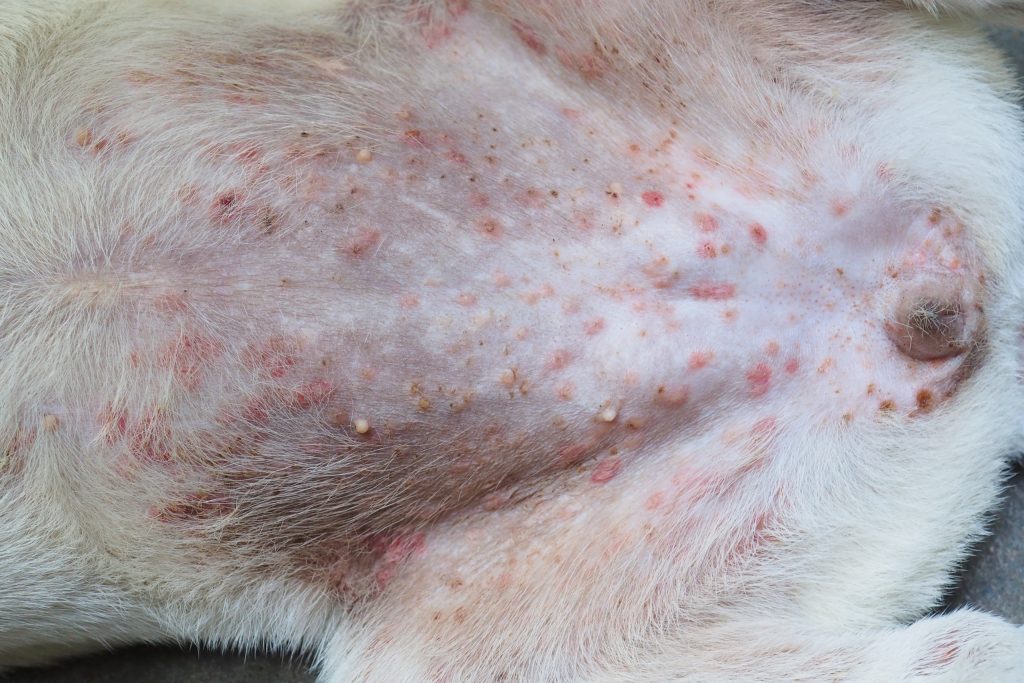
Dogs can develop pyoderma, a bacterial skin infection, when their skin barriers break down. You’ll notice papules or pustules that look like pimples with white, pus-filled centres on their skin. Look out for these signs:
- Circular crusts and scaly red patches
- Dry or flaky skin patches
- Hair loss where infected
- Constant scratching
Pyoderma usually develops because of other issues like allergies, fleas, or hormonal imbalances. Some breeds with skin folds such as Spaniels, Pugs, and Bulldogs are more likely to get skin fold pyoderma. Bacteria thrive in the warm, moist environment between their skin folds.
Yeast infections and ringworm
Yeast infections and ringworm are both fungal infections but look quite different. Yeast infections happen when normal yeast on your dog’s skin grows out of control. Your dog’s coat might smell musty or like sour milk, feel greasy, and itch a lot. The skin can darken over time, especially around the belly, groyne, and armpits.
Ringworm isn’t actually caused by a worm – it’s a fungus. It creates round patches where the skin becomes red, raised, hairless, and itchy. This condition spreads easily to humans and other pets, unlike yeast infections. The fungus likes to eat dead skin cells and hair, and usually shows up on your dog’s face, ears, tail, and feet.
Hot spots and moist dermatitis
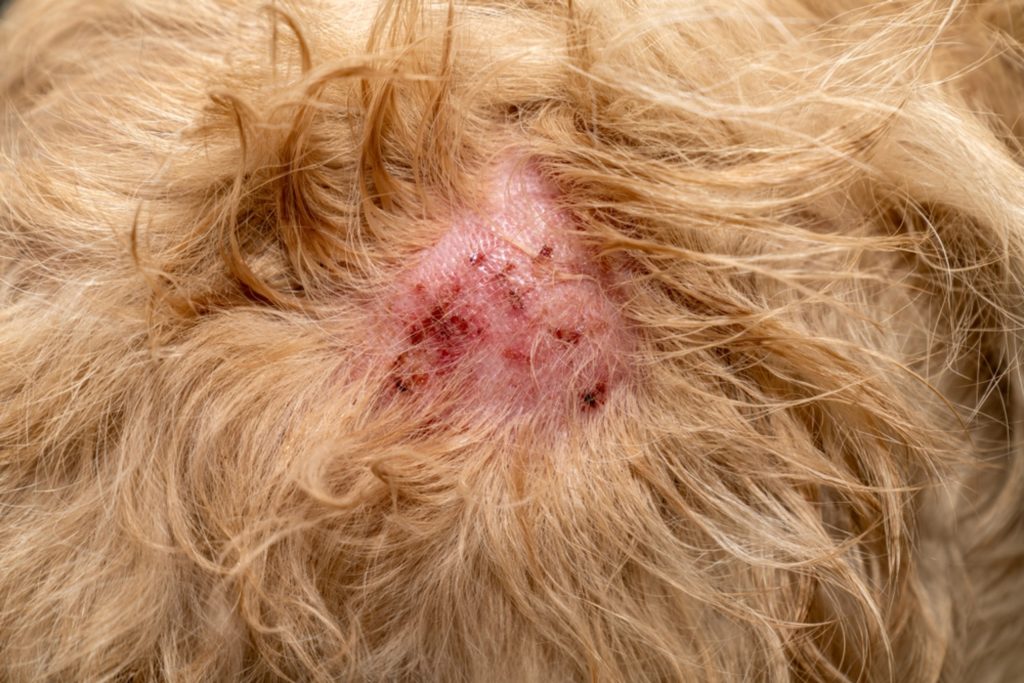
Hot spots (acute moist dermatitis) can pop up quickly and cause real trouble. These red, inflamed patches look wet, often leak fluid, and might contain pus. Something as small as an insect bite or scratch can trigger them. The infection starts when your dog keeps licking or chewing the area.
The affected areas turn red and angry-looking, stay moist, and give off a distinct bad smell. These spots can grow fast – what starts as a tiny dot can become as big as a pancake in just 24 hours. Your dog might develop these due to fleas, skin allergies, ear infections, or just plain boredom.
Spots on dogs: what they could mean
Unusual spots on your dog’s skin shouldn’t be ignored. Black spots often show up because of hyperpigmentation – extra melanin production triggered by inflammation, allergies, or infections.
Red circular spots might point to bacterial infections or ringworm, especially if hair is falling out around them. Raised, crusty spots could be allergic reactions or early hot spots. Spots with pus usually mean bacterial infections like pyoderma.
Fleas and mites can irritate your dog’s skin and cause discoloured spots, particularly if there’s lots of scratching. Your dog’s spots might also come from hormone problems like hypothyroidism or Cushing’s disease, along with other symptoms.
Quick action makes a big difference in treating these skin conditions and helps keep your dog comfortable. If you notice any of these symptoms, it’s best to take your dog to the vet right away.
What triggers skin infections in dogs?
Your dog’s skin infections often stem from several underlying mechanisms. That persistent scratching you notice usually points to one or more triggers that create perfect conditions for bacteria or fungi to thrive.
Fleas, mites, and parasites
External parasites top the list of culprits that cause skin infections in dogs. Fleas might be tiny, but they can make your dog substantially uncomfortable. A single flea bite can trigger intense itching, especially in dogs with flea allergies. These parasites feed on your dog’s blood and leave saliva that irritates the skin, which creates ideal conditions for bacterial infections to develop.
Different types of mites cause specific problems:
- Demodex mites live naturally in hair follicles but multiply faster when your dog’s immune system weakens, which leads to hair loss and skin inflammation
- Sarcoptic mites (mange) dig into the skin and cause intense itching that creates open wounds prone to infection
- Ear mites target the ear canal but can spread to nearby skin
Ticks and lice can also damage your dog’s skin barrier. Dogs with skin folds don’t deal very well with these issues. Breeds like Bulldogs, Shar-Peis, and Pugs face higher risks because their skin folds trap moisture and become perfect breeding grounds for bacteria.
Food and environmental allergies
Food allergies show up in only about 10% of dogs with skin problems, but they can cause serious issues. These allergies usually involve proteins like chicken, beef, or dairy. The immune response inflames the skin and creates favourable conditions for organisms to grow.
Environmental allergies happen much more often than food sensitivities. Common allergens include:
- Plant pollens
- Mould spores
- Dust mites
- Grass sap
These substances trigger reactions that make dogs scratch excessively. This damages their skin and creates openings for infections. Secondary skin infections from allergies will likely return if you treat only the infection without addressing the allergy itself.
Hormonal issues like hypothyroidism or Cushing’s
Hormonal imbalances substantially affect your dog’s skin health and often lead to recurring infections. Hypothyroidism happens when the body doesn’t produce enough thyroid hormone. This condition increases infection risk through several skin changes:
- Dry, flaky skin
- Excessive shedding
- Thinning coat
- Darkening of the skin
- Slower tissue repair
Middle-aged dogs (4-10 years old) commonly develop this condition. While it can affect any breed, medium to large breeds face higher risks.
Cushing’s disease shows up as another hormonal trigger when the body produces too much cortisol. This weakens the immune system and makes dogs more likely to get skin infections. You might notice thin skin, hair loss, and a pot-bellied appearance. These dogs catch bacterial skin infections easily because of their weakened immune system.
Poor nutrition, lack of grooming, and environmental factors like high humidity or extreme temperatures can also lead to skin infections. Most dogs develop these infections from a mix of these issues rather than just one cause.
How to tell if it’s time to see the vet
Pet owners often struggle to decide if their dog’s skin problems need a vet visit. Dogs scratch naturally, but some symptoms clearly show they need professional help.
Persistent symptoms that don’t improve
Simple skin irritations should get better within 2-3 days with proper home care. You should ask your vet if your dog’s symptoms:
- Don’t improve or get worse after 3-4 days of home treatment
- Come back quickly after getting better
- Spread to more skin areas over time
- Make your dog very uncomfortable despite your help
Your dog’s behaviour tells a lot. Professional care becomes necessary when scratching disrupts sleep, stops normal activities, or causes obvious discomfort. A vet should look at any skin problem that doesn’t respond to treatments that worked before.
Signs of pain, pus, or bleeding
Some symptoms show serious infection that needs quick medical care:
- Pus or discharge coming from affected areas
- Bleeding or raw skin because of too much scratching
- Strong odour from the skin that smells yeasty or rotten
- Heat or swelling in the problem area
- Pain when touched or avoiding being handled
- Changes in skin colour especially dark patches or bright redness
A vet should check anything more serious than dry skin or mild redness. Yellow or green discharge often points to bacterial skin infections that need immediate attention.
When skin infections become emergencies
Some skin problems turn into serious medical emergencies. Rush to emergency care if you see:
- Fever (above 39.2°C/102.5°F) with skin symptoms
- Lethargy or weakness unusual for your dog
- Loss of appetite along with skin issues
- Rapid spread of skin problems within hours
- Significant facial swelling, especially around eyes or muzzle
- Difficulty breathing together with skin symptoms
Minor skin problems sometimes point to bigger health issues. You know your dog better than anyone – trust your gut and call your vet if their behaviour changes dramatically or something seems wrong. Quick treatment of skin infections helps your dog feel better and prevents serious complications that might need extensive care later.
Your dog’s skin infection needs a comprehensive treatment plan that matches their specific condition. A mix of medications and proper home care will help your pet recover after your vet’s diagnosis.
Medicated shampoos and topical treatments
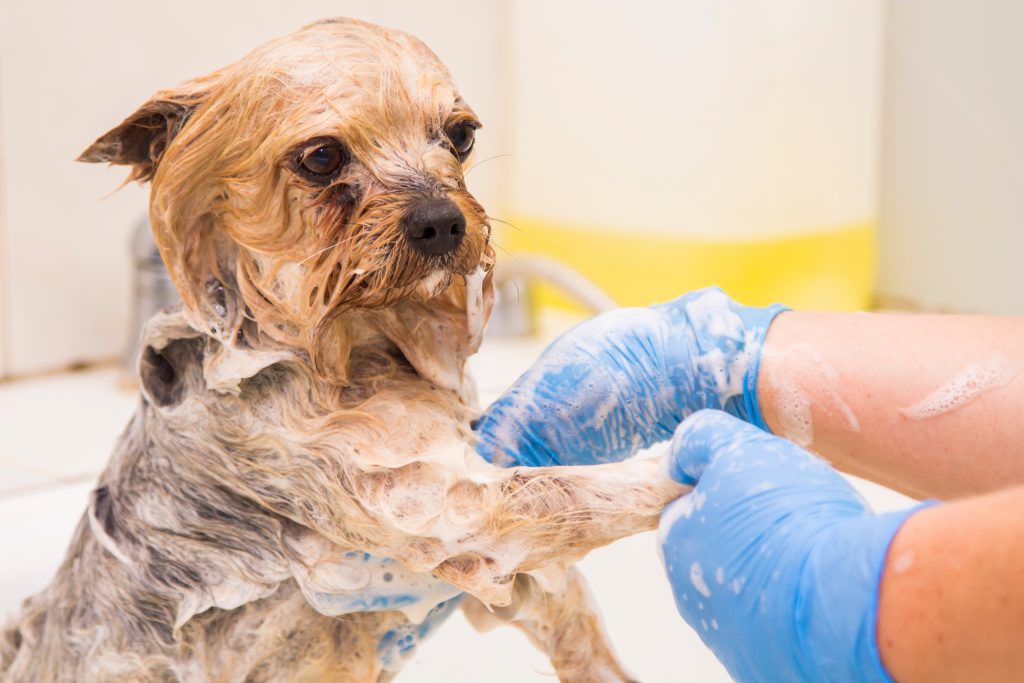
Medicated shampoos are the life-blood of treating many dog skin infections. These special products contain active ingredients like chlorhexidine (2-4%), benzoyl peroxide, or sulphur with salicylic acid that fight bacterial and fungal organisms. You should apply the shampoo to affected areas first and work through the rest of the coat. Let it sit for at least 10 minutes before rinsing.
Your vet might also suggest topical sprays, mousses, wipes, or ointments with antimicrobial agents. These products work between baths to keep treatment consistent, especially for isolated spots. Dogs with greasy or oily skin might need an original “degreasing” wash with selenium sulphide or benzoyl peroxide before starting medicated treatments
Oral antibiotics and antifungals
Serious or stubborn skin infections often need oral medications. Bacterial infections like pyoderma usually need antibiotics such as amoxycillin, cephalexin, or clindamycin for at least three to four weeks [291]. Long-term cases might require 8-12 weeks of treatment, plus bacterial culture tests to pick the right antibiotic [291].
Fungal infections need oral antifungals like ketoconazole, terbinafine, itraconazole, or fluconazole. These medications work well but must be taken for several months. Your vet will monitor your dog’s liver function through regular blood tests [311].
Daily care tips to prevent future infections
Healthy skin needs consistent care. Regular grooming with dog-specific products helps stop infections from coming back. Note that human shampoos don’t work because they have the wrong pH for your dogs skin.
The good news? Most skin infections respond well to proper treatment. Medicated shampoos, topical treatments, and oral medications work to curb these conditions when used as directed. Prevention remains your best strategy. Regular grooming, parasite control, proper diet, and quick intervention are the foundations of your dog’s skin health.
Disclaimer: The contents of Itsadogz.life website are for informational and educational purposes only and should NOT replace professional Veterinary Advice. Always consult a qualified Veterinarian regarding your dog’s health and any concerns you may have.
Neither the owners nor creators of this site are engaged in providing veterinary medical services via this site and assume no responsibility for any consequence relating directly or indirectly to any action you take or do not take based on the information, services, products, or other materials provided on this site.
