


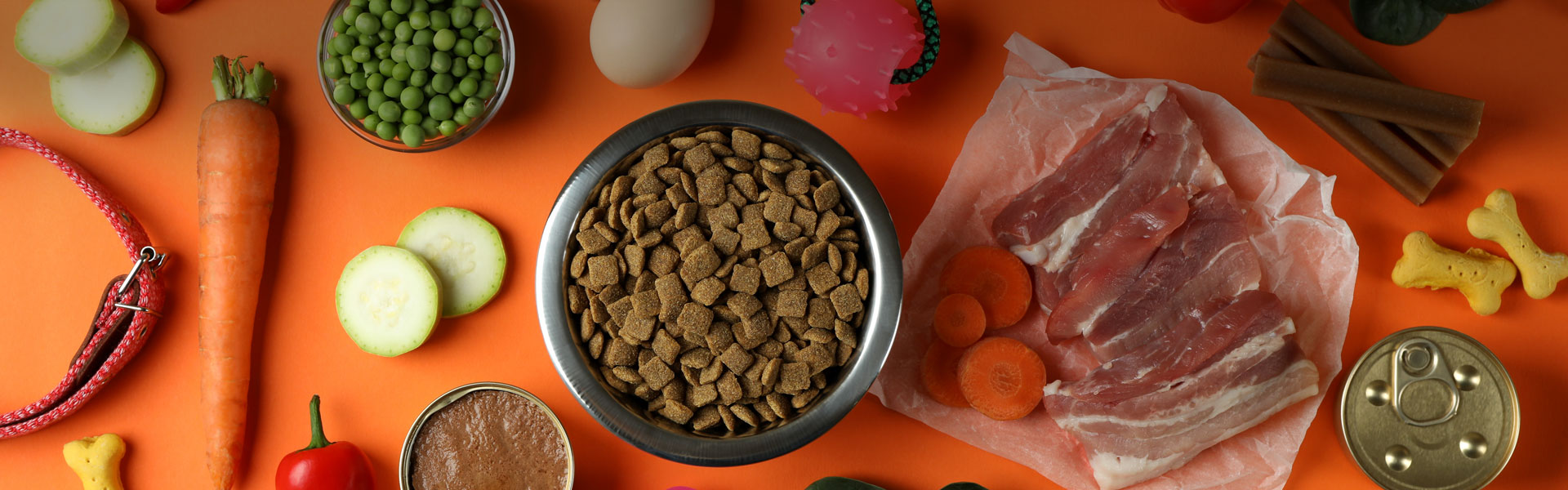
Food Allergies, intolerance and Elimination Diet
Welcome to our article on Advice about food allergies and elimination diets. Here we discuss what food allergies are, and different ways to discover what food allergies are, we also discuss the various elimination diets available.
Food allergies and intolerances.
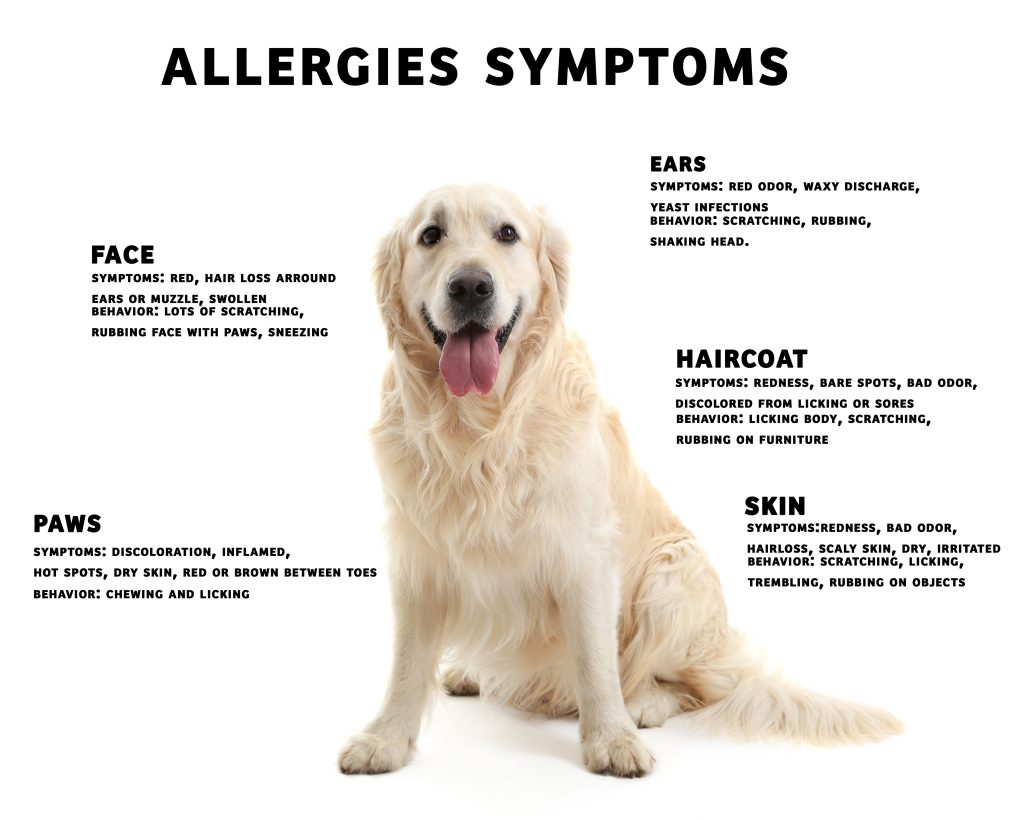
Not all allergies present in the same way, food allergies can present in different ways (we’ll talk about intolerances in a minute), you can get hives (little raised bumps on the skin), red skin (usually but not always around the chin) and you can get behavioural changes such as hypersensitive to touch, which then tends to trigger naughty/cheeky behaviour, the inability to calm, it’s a bit like toddlers if they have too much sugar or are over tired. Once the trigger is removed from the diet the behaviour ceases. another symptom is itching, so rubbing their face and scratching after they have eaten.
Food intolerance differs from an allergy because with the intolerance the dog is essentially unable to process the particular protein normally and it causes diarrhoea, which again once the food is no longer consumed then the diarrhoea goes away very quickly, my own dog is intolerant to beef (I found this out when she was on raw), so pre-PLE anything that contained Beef or anything beef related she can’t tolerate, we have to use eggshell powder for the calcium component for her homecooked PLE diet because bone meal (beef) gives her diarrhoea. So with food intolerances, it is far easier to see what your dog is and isn’t intolerant to (that one is better figure out by using raw because with dry food it could be anything in the ingredients)
Testing and different elimination diets.
Blood samples
A blood sample is taken (no requirement for general anaesthetic or sedation) and then sent to a laboratory for ELISA (Enzyme Linked Immunosorbent Assay) testing. The blood serum is tested for increased IgG and IgE responses to possible allergens ( see Allergy Results Explained)
As with a lot of things in life, there is much controversy regarding how accurate the results from blood test are, due to the fact that the results have never been scientifically validated. Because of this some vets won’t test for food allergies by taking blood samples but others will. Whilst blood tests for food allergy results have not been scientifically validated, the results can be proved right by elimination diet – see authors note.
The alternative method to test for food allergies is by the elimination diet.
Food Elimination Diets
With food elimination diets the best thing to do is to break the concept into sections as it’s a very broad subject.
The basis behind the elimination diet is to use a protein that the dog hasn’t had before as a control. This is called the ‘novel’ protein. Now that there are multiple hypoallergenic brands available in every pet shop, proteins that used to be considered ‘novel’ such as lamb and fish are no longer considered to be, as they are now so widely available.
There are various diets available please see A guide to dog food for more detailed information. For the purpose of this article, we will discuss the ones below.
Raw dog food – This is increasing in popularity as people opt to feed a more natural diet or to cater for allergy dogs and dogs with other health conditions. Raw food specifically for pets has the appropriate nutrients for maintaining the animal’s health. It has an acronym – ‘BARF’. This stands for Biologically Appropriate Raw Feeding and has an 80:10:10 ratio of 80% meat (protein), 10% organ meat (offal), and 10% finely ground bone. These meals are known as ‘completes’ and take the guesswork out of obtaining the correct dietary balance. Ideally, a dog should have a rotation of 5 different proteins (of both high and low fat) to maintain a good nutritional balance. However, some pets may be restricted to mainly low fat with a small amount of high fat if they suffer from colitis for example.
If your dog suffers from food allergies, then they may be restricted to single protein choices but they will still manage perfectly well on a protein restricted diet.
You can buy either single protein e.g. chicken or mixed protein e.g. lamb, fish and turkey combined. If buying single protein read the label and make sure it is 100% single protein (usually says purely goat, purely venison etc. on the label), I have come across some that look like they are single protein but on closer reading of the label they contain ox liver or another protein so do be aware.
Some companies will add vegetables or other things like wheat-grass powder to their food, if your pet has allergies then you may want to avoid these products unless you know they are not allergic to the inclusions.
Limited Ingredient food – This food contains far fewer ingredients than your average dog food recipe and this makes it ideal for helping to determine the potential food allergy. These products work best if the allergy is to animal protein. The problem arises if there is an allergy to say potatoes as most of the diets contain potato and other vegetables, so you could be feeding the diet and not identifying the allergen. These products can sometimes be made in the same factory as normal pet food and thus you can have cross-contamination.
Hypoallergenic (Vet/Prescription diets) – These are Royal Canin, Hills and Purina. The hypoallergenic diets are where the protein has been hydrolysed (broken down) into polypeptides, which are too small to stimulate a response from the immune system. Although dogs can still have a food reaction, it is unlikely.
Anallergenic – These are Royal Canin (Anallergenic), Hills (Z/D). With the Anallergenic diets. The anallergenic diet, the carbohydrate and protein source is Maize starch and feather hydrolysate and for Hill Z/D the carbohydrate and protein source are maize starch and chicken liver hydrolysate, the proteins have been hydrolysed even more, so that the particles are even smaller than the hypoallergenic diets and therefore a reaction is highly unlikely. This food suits dogs that are known to have allergic reactions to food. If you are doing an elimination diet with dry food, then this is probably the better one to go for because there’s even less chance of a reaction.
Commercial Hypoallergenic/Grain Free – These are now very common but be aware that some brands do contain rice, which isn’t always tolerated by allergy dogs. Also, as these diets are so common the proteins used are no longer considered to be novel.
Home Cooked – This is where you cook a novel protein and add a carbohydrate source normally rice or sweet potato. This is how I found out that one of the blood food allergy results on my dog was correct. Fed zebra and rice, my dog reacted to the rice which was a positive result on the food allergy panel. If you plan on going down the home-cooked diet route we strongly recommend getting in touch with a veterinary nutritionist and have them design the diet as it will then be nutritionally balanced.
One of the main problems with feeding dry food is that as one allergy specialist vet pointed out to me, they could be reacting to any of the ingredients (including storage mites, that one is tested for in environmental allergy tests). This is why many people either feed raw (you know what your dog is eating and possibly reacting to) or the vet prescription hypoallergenic/anallergenic diets.
How to feed an elimination diet
Whichever diet you choose to feed, you will need to feed it for 8-10 weeks. Dogs are NOT allowed the following during the elimination food trail: treats, biscuits, pill pockets (treats that you hide tablets in), scraps etc. For treats use the food you are feeding or if feeding raw you can buy 100% meat treats so try to use a protein that can be found in treat form (JR Pure treats).
It is important to use a food elimination sheet to record the progress of the diet and the itching so that you can see what is working and what isn’t.
After 8 weeks you can try either another protein if you are feeding raw or try one meal a day with their original dry food for a few weeks. If the symptoms increase then you can switch back to the original ‘safe’ protein until they decrease and then try another protein, if there isn’t an increase in symptoms then that’s another safe protein to add to the diet. Then just keep repeating the test until you have a range of proteins to which the dog does not react.
If using the hypoallergenic or anallergenic dietary products then you can switch back to just that and continue to use that food until the itching stops and then just continue using that food or try adding a different food but compare the ingredients so you know what’s in them and you could possibly narrow down the possible reactors that way.
Also, it is worth noting that if your dog also has environmental allergies then it can make the food elimination diet a little more tricky because they will also react to external allergens so you may find it harder to determine if there is a food allergy present.
Authors Note:
Whilst the food allergy blood results are considered to be scientifically unproven, there are exceptions to every rule (I own one of those dogs that seems to be the exception to most rules). Many years ago, when my own dog was around 3 (now 12), I had an allergy blood panel carried out for food allergies (my theory then was that I couldn’t control the environmental allergies but I could with food). Results came back and we switched to raw to avoid, wheat, corn, soybean, rice, and peas (via raw I also found out she reacted to turkey and is intolerant to beef/veal). Over the years she has managed to prove the blood test to be correct. If she ate winter horse poo (horses are generally fed hard feed in the winter which contains cereals), she would become congested, reverse sneeze (that can be very quiet and hardly noticeable or like my dog, very dramatic and you can’t fail but hear it). Soybean was proven when she went in for an operation and went bright red and came out in hives all over when Propofol (a pre-med for an anaesthetic) was used. After that, we switched to Alfaxalone which doesn’t contain soybean oil as the carrier, and she hasn’t had a reaction since). Rice was proven by a home-cooked elimination diet – she went off the anallergenic dry food. We ended up with a very itchy and very red and puffy chin and lips.
Whilst we’ve never proven the pea allergy, it was the only ingredient that was present in all the dry foods she was on before allergy testing. We have also found her to be allergic to white potato. You will find if you have an allergy dog and they have a reaction, whilst your dog may not get hives (mine never did), you may notice behavioural changes, which is what made me realise she was allergic to turkey. When my dog ate turkey, she was very hyperactive, and hypersensitive to the touch (just the slightest touch would send her into a play-fighting frenzy), She would be more cheeky/naughty, steal things, get over-excited with play-fighting, and couldn’t calm down (a lot like an over tired toddler who has had too much sugar). At that point, she was on raw and I gave her venison which I knew was a safe protein for her and within a day she was calm and not hyperactive.
We hope you found our article advice on food allergies and elimination diets, our other articles may be of interest to you: Allergies In Dogs and Allergy Medications For Dogs.
The PDSA has produced an article on food allergies, for more information.
Disclaimer: The contents of Itsadogz.life website are for informational and educational purposes only and should NOT replace professional Veterinary Advice. Always consult a qualified Veterinarian regarding your dog’s health and any concerns you may have.
Neither the owners nor creators of this site are engaged in providing veterinary medical services via this site and assume no responsibility for any consequence relating directly or indirectly to any action you take or do not take based on the information, services, products, or other materials provided on this site.
