



What is Cushing's Disease, causes, symptoms and treatment
Cushing’s disease in dogs (also known as Hyperadrenocorticism) is a lifelong condition. There are two types of Cushing’s, the first is when the pituitary gland (a little gland situated in the lower part of the brain) produces too much ACTH (Adrenocorticotropic hormone) without the brain sending signals to the adrenal glands to produce cortisol.
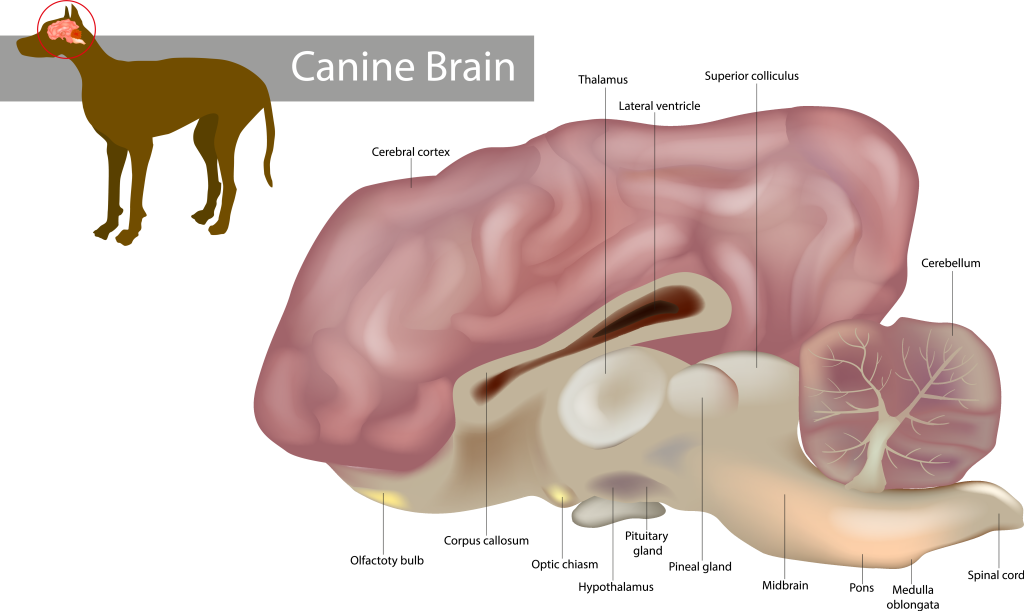
The second type is where the adrenal glands themselves produce too much cortisol, again without the brain sending signals to adrenal glands to produce cortisol.
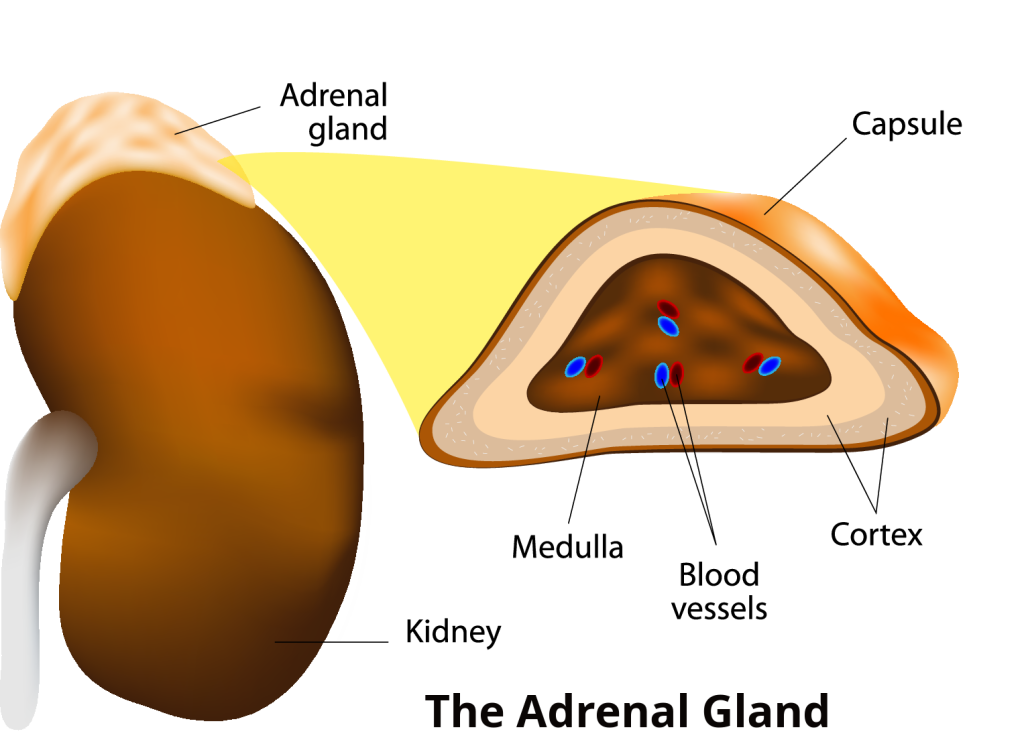
Most cases (85%) are the pituitary gland and the other 15% are the adrenal glands. Both types of Cushing’s are usually caused by a tumour, which is often benign and only causes problems with releasing the correct amount of cortisol.
Symptoms
Excess cortisol causes the following symptoms:
- Excess drinking and urination
- Pot belly appearance
- Bald patches on the sides and tail
- Dark patches on the skin
- Calcium patches on the skin
- Thin scaly skin which is prone to infection and blackheads
- Increased appetite
- Weight gain
- Increased panting, such as when resting or low exertion activities
- Muscle loss
High levels of cortisol means that the cortisol becomes catabolic and starts to breakdown muscle, it is this muscle loss which causes the pot belly appearance and leads to dogs struggling to get up or to go upstairs.
The test to help diagnose Cushing’s is the same test that Vets use to help diagnose Addison’s Disease In Dogs.
What is the ACTH Stimulation Test?
Your vet will most likely admit your dog for the duration of the test, so that any stress your dog is experiencing can be reduced (if your dog gets really stressed when visiting the vets, then they’ll most probably ask you to wait with your dog in the car for the duration of the test). Your vet will take a small amount of blood before the ACTH test to provide a ‘baseline’ cortisol level. The ACTH test itself is where a small amount of ACTH (Adrenocorticotropic hormone) is administered in the form of an injection. Once the injection has been administered, there is a waiting period of 1 to 2 hours before blood is taken again to measure the cortisol level and compare it against the baseline sample. Once the ACTH is injected then with Cushing’s the body will release abnormally high amounts of cortisol, so when the results and baseline are compared there will be a significant rise in the cortisol levels. It is worth noting that with Addison’s Disease In Dogs, the body will not be able to react adequately to ACTH so when the two cortisol levels, baseline and test are compared there will not be a significant rise in the cortisol levels.
Treatment
Once your dog has been diagnosed with Cushing’s, then most dogs are prescribed a drug called Trilostane, this drug reduces the amount of cortisone that the adrenal gland produces. Note that whilst it is important to reduce the amount of cortisol in production to a normal level, it is equally as important not to lower it to below normal levels because insufficient levels of Cortisol and Aldosterone cause Addison’s disease.
It can take a while to find the correct dose for your dog, so vets usually start your dog on a low dose of Trilostane, monitor symptoms, and run regular blood tests. They will also run the ACTH stimulation test, 3-6 hours after the Trilostane capsule has been given with breakfast. The dosage of Trilostane may then be adjusted depending on the ACTH stim test results and seeing how your dog reacts to the medication.
We hope you found our article useful and informative, we found an article by Vetoryl on Cushing’s syndrome for further reading.
Disclaimer: The contents of Itsadogz.life website are for informational and educational purposes only and should NOT replace professional Veterinary Advice. Always consult a qualified Veterinarian regarding your dog’s health and any concerns you may have.
Neither the owners nor creators of this site are engaged in providing veterinary medical services via this site and assume no responsibility for any consequence relating directly or indirectly to any action you take or do not take based on the information, services, products, or other materials provided on this site.
