


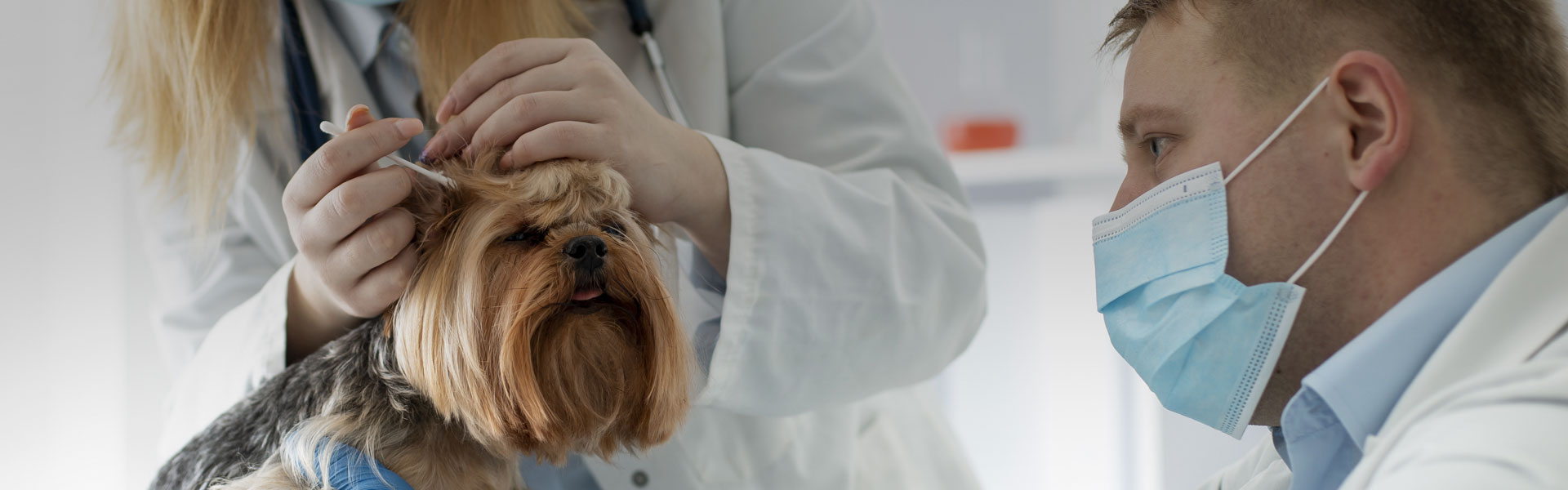
Yeast Infections
Welcome to our article on yeast infections in dogs. Yeast (Malassezia to give the yeast its proper name) can live happily on the skin of a healthy dog, in the ears and anal glands. When the conditions on the skin surface change they can create the ideal environment for the proliferation of yeast, it is this proliferation that causes yeast infections. Usually, yeast infections appear in the dog’s ears.
There are many things that can cause the overgrowth of yeast, such as steroids, antibiotics, immune deficiency/overactive immune system, food and environmental allergies, and an allergy to the proteins in the yeast cell wall. Anything that alters the conditions of the surface of the skin or increases the natural oils in the skin, can cause the yeast to proliferate. The most frequent places for yeast overgrowth to occur are between the toes, armpits, and ears. The yeast is often transferred to the ears from the feet when the dog scratches.
As the yeast fungus likes moist environments some dogs that spend a lot of time in water can be prone to ear infections caused by the water creating a moist environment. It is also possible to develop an allergy to the proteins in the yeast cell wall, if that happens, very few yeast organisms are necessary to create a large area of inflammation.
The common signs of a yeast infection are:
- Scratching and rubbing
- Colour/texture changes of the skin – red or pink from chewing when the infection first occurs, changing to grey/black and leathery if the yeast infection becomes chronic
- Head tilting and shaking if the ears are affected – although this can occur for other reasons such as grass seeds
- Licking
- Hair loss around the ears if a yeast infection is present
- Odour, you may detect a cheesy/musty smell from the infected area
- Drooling and problems eating only happen in the rare occurrence of a yeast infection in the mouth. This can also be a sign of other health problems; your Vet will be able to tell you whether the problem is yeast or something else such as a dental problem.
There are several methods of treatment depending on how severe the infection is.
- Medicated shampoos – these are antifungal and help to get the yeast back under control, any underlying health issues will need to be addressed at the same time.
- Topical Creams, providing the infection is small and localised then antifungal creams are used.
- Oral medication is generally used if the infection is deep within the ear canal (see ear infections). If the infections are a recurring problem the vet may suggest surgery to prevent the infections from returning.
- As diets high in sugars and carbohydrates are a big contributing factor to yeast overgrowth it is worth taking a look at your dog’s diet and making sure that it’s not high in things like raw vegetables as these contain high amounts of sugars.
- It is also worth making sure you clean their ears regularly and dry their feet as much as possible after wet walks or after they have been swimming.
Some breeds of dogs are more genetically predisposed to yeast infections, these include the West Highland White Terrier, Basset Hound, Spaniels, Silky terrier, Australian terrier, Maltese, Chihuahua, Poodle, Shetland sheepdog, Lhasa apso, and the Dachshund.
The following articles may be of interest, Allergies In Dogs, Advice on Food Allergies and Elimination Diets, Allergy Medications For Dogs, A guide to dog food.
we found Vets for pets article yeast infections in dogs for further reading.
Disclaimer: The contents of Itsadogz.life website are for informational and educational purposes only and should NOT replace professional Veterinary Advice. Always consult a qualified Veterinarian regarding your dog’s health and any concerns you may have.
Neither the owners nor creators of this site are engaged in providing veterinary medical services via this site and assume no responsibility for any consequence relating directly or indirectly to any action you take or do not take based on the information, services, products, or other materials provided on this site.
