



The Westie
Historical Background
The West Highland White Terrier, affectionately known as the Westie, hails from the Scottish Highlands. The breed’s origins can be traced back to the 19th century when they were developed from the same lineage as the Cairn and Scottish Terriers. Legend has it that Colonel Malcolm of Poltalloch was instrumental in the breed’s development. After a tragic incident where he accidentally shot his beloved brown terrier, mistaking it for a fox, he decided to breed white dogs that would be easily distinguishable during hunting. Thus, the distinctive white coat of the Westie was established, and the breed became favoured for its vermin-hunting prowess.
Description and Group Classification
West Highland White Terriers belong to the Terrier group, known for their feisty and spirited nature. They are small, sturdy dogs with a distinctive white, double coat that is both weather-resistant and appealing. The breed’s upright ears and bright, dark eyes give them an alert and lively expression, which is a hallmark of their endearing personality.
Suitability to Various Lifestyles and as a Family Dog
Westies are versatile and adapt well to a range of living situations. They are excellent companions for individuals and families alike, thriving in environments where they receive plenty of attention and engagement. Their friendly nature makes them good with children, though interactions should always be supervised to ensure safety and respect on both sides.
Ideal Home Environment
Westies are adaptable and can thrive in both urban and rural settings. In a town setting, they benefit from access to parks and regular walks to expend their energy. In the countryside, they enjoy exploring open spaces. Regardless of location, they should always have a secure garden, as their curious nature might lead them on unintended adventures.
Training Requirements
Training a Westie requires patience, consistency, and positive reinforcement techniques. Their intelligent yet independent nature can sometimes translate into stubbornness, so training should be engaging and varied to hold their interest. Early socialisation is crucial to help them develop into well-rounded adults, comfortable in different environments and situations.
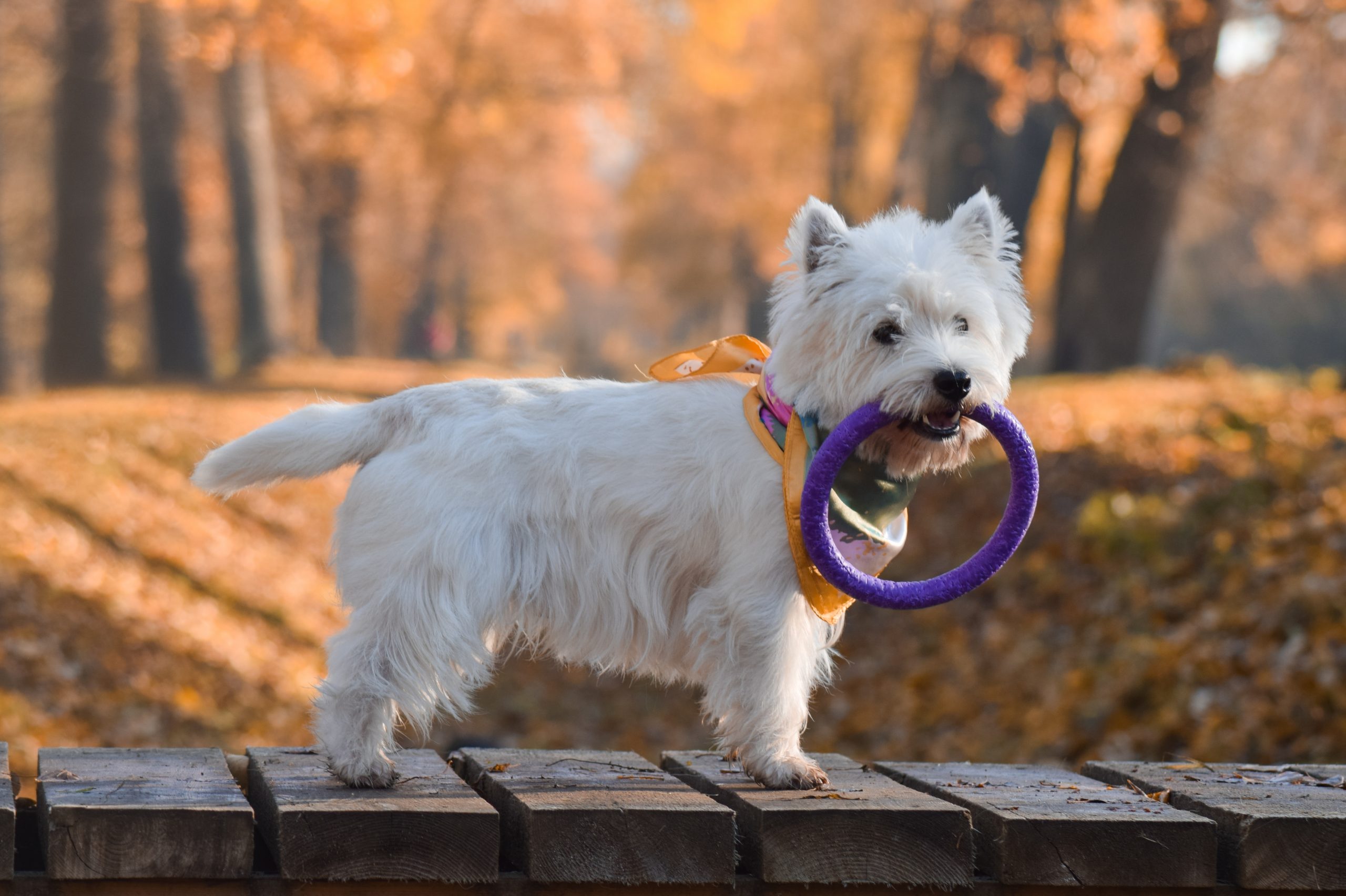
Westies are compact and sturdy dogs, typically weighing between 6.8 to 9.1 kg and standing about 25 to 30 cm at the shoulder. True to their name, they come in a singular, striking white coat, which sets them apart from other terrier breeds.
Westies generally enjoy a lifespan of around 12 to 16 years, a testament to their robust nature. With proper care, many live well into their senior years while maintaining their spirited demeanour.
Temperament and Personality Traits
Westies are known for their playful, friendly, and confident nature. Despite their small size, they possess a big personality, characterised by curiosity and an adventurous spirit. They are affectionate and loyal to their families, making them delightful companions. However, their terrier instincts mean they can be a bit stubborn and independent, traits that owners often find charming but occasionally challenging.
Though small, Westies are active dogs that require regular exercise to keep them physically and mentally stimulated. A daily routine of walks, playtime, and even some agility exercises can help channel their energy positively. They thrive on interaction and love engaging in activities that challenge their agility and intelligence.
Westies have a dense double coat that requires regular grooming to keep it in top condition. Brushing a few times a week is essential to prevent matting and to remove loose hairs. Regular professional grooming, including trimming, can help maintain their characteristic look. Additionally, like all dogs, they require routine care for their teeth, nails, and ears.
Health
While generally healthy, Westies can be prone to certain genetic conditions. Skin issues, such as allergies and Westie Armadillo Syndrome, are common. They may also be susceptible to hip dysplasia, patellar luxation, and certain heart conditions. Regular veterinary check-ups and a balanced diet can help in early detection and management of these issues, ensuring a long and healthy life for these spirited companions.
The West Highland White Terrier is a delightful breed with a rich history and a personality that can light up any home. Their endearing traits, coupled with their adaptability, make them an excellent choice for many types of families and individuals. While they bring joy and laughter, they also require commitment in terms of training, exercise, and grooming. With the right care, a Westie can be a loving companion for many happy years.
