


Trigger Stacking
In this article, we will discuss Stimulus stacking, also known as trigger stacking in dogs. We will explore the concept of stimulus stacking and the associated reactivity behaviours, its causes, and how we can all work together to address it.
For this article, we will focus on non-aggressive dogs, as diagnosing and treating true aggression is outside the scope of this website and should be left to professionals such as veterinarians and behaviourists.
What is Reactivity?
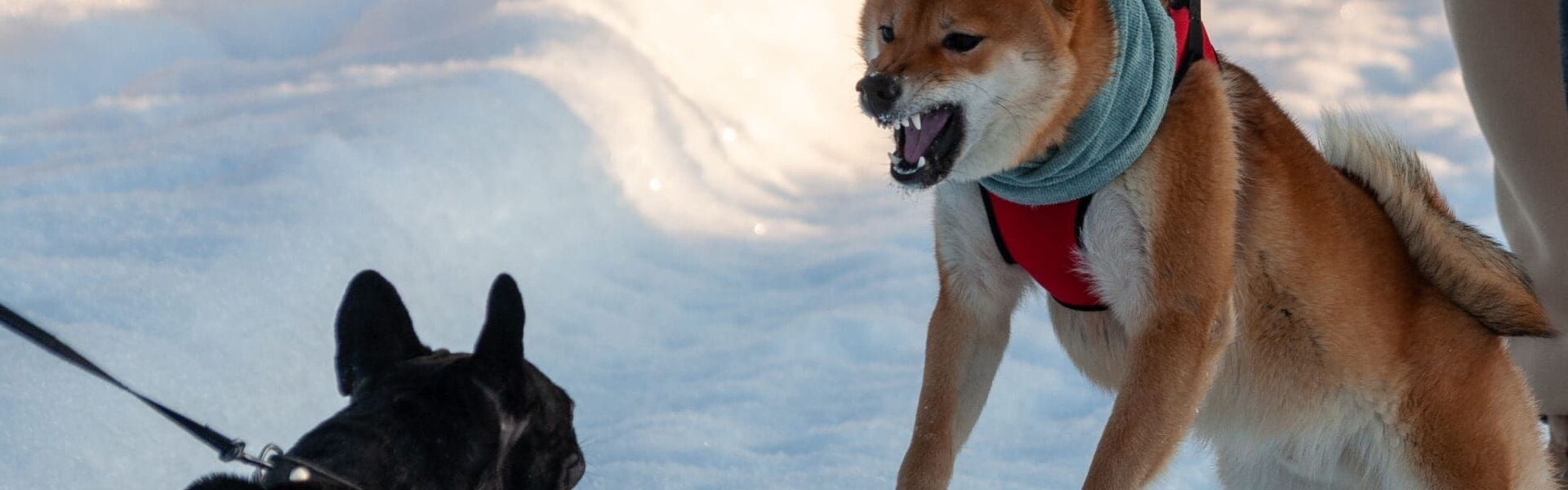
Many of us have encountered a dog that is pulling, barking, and spinning uncontrollably, or witnessed a dog owner actively avoiding situations or staying on the outskirts of a park with their reactive dog. In the past, reactivity was often interpreted the dog behaving badly and appearing aggressive, but is that still the case? Not necessarily, although the two can be connected. The dog’s actions are not a result of misbehaving or aggression (for this article), but rather a struggle to deal with their surroundings and the specific situation they are in.
This can be due to various reasons – genetics, boredom, pain, fear, anxiety (including separation anxiety), over excitement to name but a few. When looking at trigger stacking and behaviour there are many things you need to take into account including the current situation. With all of this information, you will have a better understanding of the whole picture, which will enable you to be in a better position to help your dog.
Reactive dogs exhibit behaviours of barking, lunging, and spinning as a way to create distance between themselves and their struggles of the moment. These resulting actions are commonly referred to as, Trigger Stacking, The Dog Reactivity Chart, Stress Bucket, and other similar terms, all of which aim to explain the factors that lead to a dog surpassing their coping threshold.
When times are tough it is important to….
“Always remember your reactive dog isn’t giving you a hard time, it’s HAVING a hard time”
Why Stimulus Stacking?
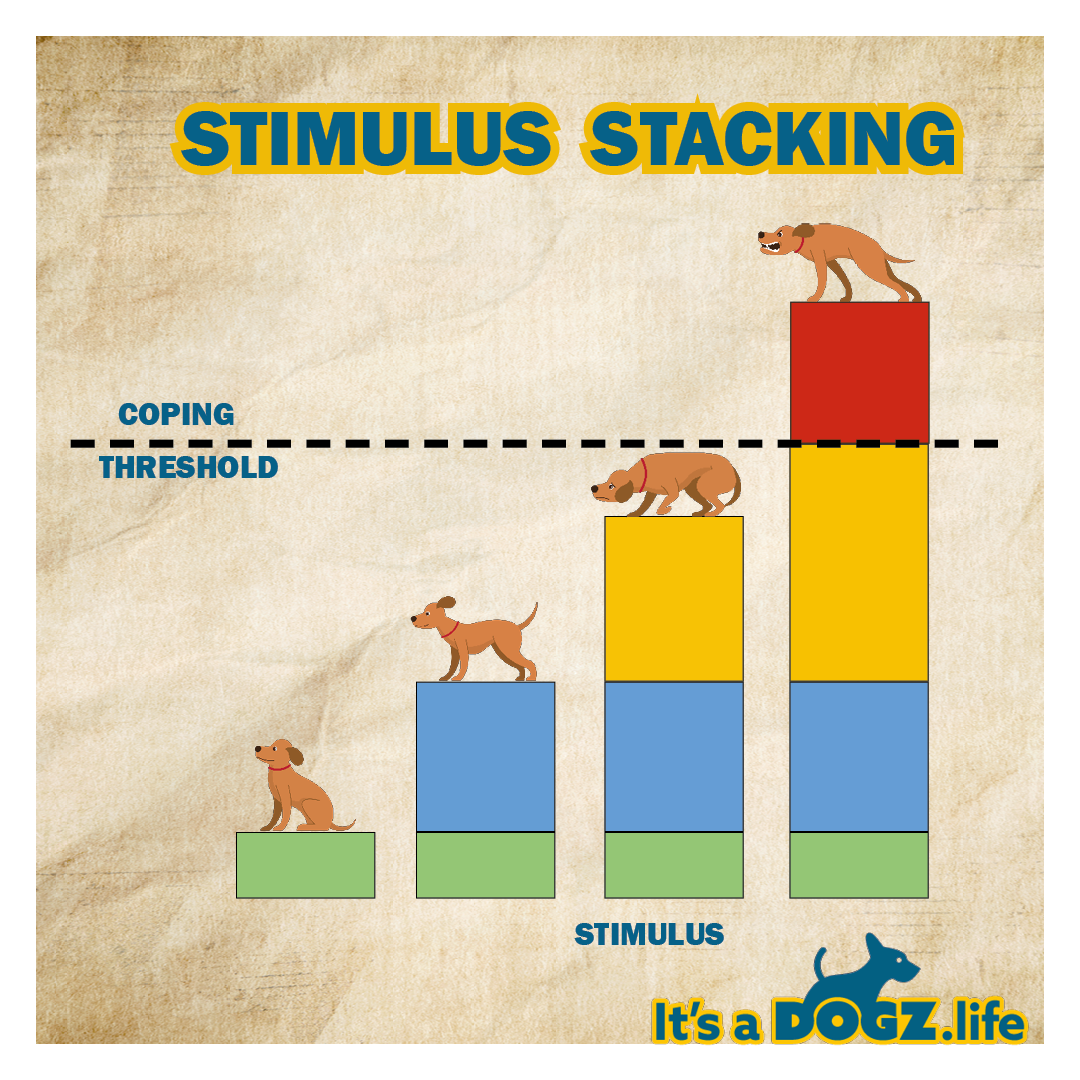
At It’s a dogz.life, we use the term “stimulus stacking” to describe this phenomenon. We prefer this term because phrases like trigger stacking and stress bucket may give the impression that only negative events contribute to a dog reaching their coping threshold, which is not entirely accurate. In reality, any positive or negative event can contribute to this threshold being reached.
This phenomenon involves a sequence of occurrences, whether positive or negative, that occur one after the other. These events transpire in quick succession, which do not allow sufficient time for the dogs’ stress levels to return to their normal level.
In human terms, it can be likened to a series of good and bad experiences within a few days, where at the end of a challenging day, one is barely managing to hold it together. When the next event occurs, whether positive or negative, it surpasses the individual’s ability to cope, resulting in the release of all the emotions and stresses accumulated over the past few days.
Dogs experience a similar principle, but instead of expressing it through words, they bark, lunge, and spin.
Tips for assisting your canine with stimulus stacking.
- Knowing and understanding breed-specific behaviours of your dog can help you understand why certain behaviours occur such as collies trying to chase moving cars, because they are bred to herd sheep (moving objects).
- Being mindful of their overall body language is crucial. Over time, you will begin to recognize the subtle shifts in their body language when they feel uneasy, you can then remove them from that situation.
- If something along your walking route, such as a barking dog, consistently triggers a reaction it would be wise to make some adjustments. Consider altering your route slightly to avoid encountering the dog and prevent any potential responses from your dog.
- Adjust the times you go for a walk to avoid any potential triggers.
- Training your dog to focus on you is crucial, although it may take some time. It’s important to reward their focus on you during the training process. As they progress, you can gradually increase the duration between using a marker word (such as “good” or “yes”) and offering a treat. It’s also essential for your dog to quickly return their attention to you, even when they are momentarily distracted by external stimuli/triggers.
- If your dog is apprehensive around individuals or other dogs, and displays reactive behaviour when they invade their personal space, you have the option of purchasing high vis yellow jackets for your dog with phrases such as “Need Space” or “Scared of People, Do Not Touch” (you can also obtain lead slips with the same message). These items serve as effective early warnings for others to refrain from petting your dog or avoid interaction altogether. Personally, I utilize both a lead slip and a jacket for one of my dogs, which states “Scared of People, Do Not Touch.” This approach has proven successful in reducing her reactivity, as she is now given the choice to interact with people or not, allowing her to remain below her coping threshold.
- Discover a fresh location for strolling where your dog may encounter fewer stimuli as they won’t be expecting anything on their regular path or surroundings.
- It is recommended to give your dog a break from walking for a few days to allow them to recover from stimulus stacking. This process can take up to 72 hours for the cortisol levels (stress hormone) to return to normal. Instead, try engaging your dog in brain games and training exercises during this time.
- If your dog is off lead and you see a owner and their dog struggling with reactivity, pop your dog back on the lead and try to give them as much space as possible.
It is important to keep in mind that a dog under stress is not able to learn.
We found some more information on situation stacking and veterinary practices that you may find interesting.
Disclaimer: The contents of Itsadogz.life website are for informational and educational purposes only and should NOT replace professional Veterinary Advice. Always consult a qualified Veterinarian regarding your dog’s health and any concerns you may have.
Neither the owners nor creators of this site are engaged in providing veterinary medical services via this site and assume no responsibility for any consequence relating directly or indirectly to any action you take or do not take based on the information, services, products, or other materials provided on this site.
