

Are you feeding your dog too much without realising?
Every dog owner wants to do the best for their pets. After all, feeding feels like care, love and routine all rolled into one. But despite good intentions, many people are overfeeding dogs without even realising it.
Weight gain in dogs is often gradual, which makes it easy to miss until health or mobility issues start to appear.
Why overfeeding happens so easily
Overfeeding isn’t usually about too much food at mealtimes. It’s about everything else that sneaks in around them.
Common causes include:
- Treats on top of full meals
- Inaccurate portion sizes
- Multiple people feeding the same dog
- Human food given “just this once”
- Reduced exercise without adjusted feeding
These small extras add up far faster than most owners expect.
What a healthy weight actually looks like
Many dogs people consider “normal” are actually carrying extra weight.
A healthy dog should:
- Have a visible waist when viewed from above
- Have ribs that can be felt easily under light pressure
- Move comfortably without stiffness or reluctance
If you can’t feel your dog’s ribs at all, or they’ve lost their waistline, it may be time to review their diet.
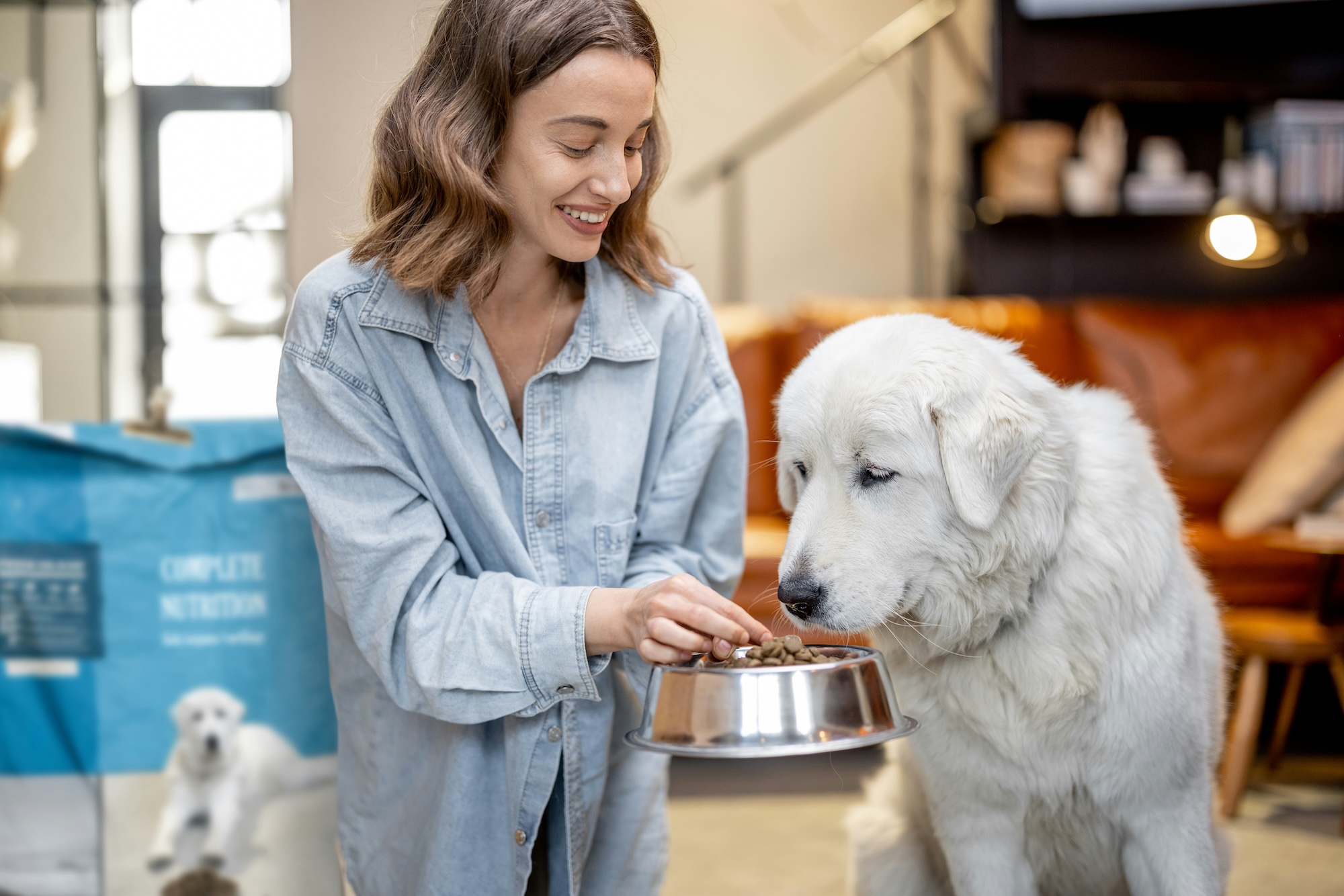
The hidden risks of overfeeding dogs
Carrying extra weight puts strain on far more than a dog’s appearance.
Potential risks include:
- Joint and mobility problems
- Heart and respiratory strain
- Reduced stamina and energy
- Increased risk of diabetes
- Shortened lifespan
Even a small amount of excess weight can have a significant impact over time.
Treats, snacks and “extras”
Treats are often the biggest contributor to overfeeding dogs.
Many owners don’t realise that:
- Treat calories count just like food
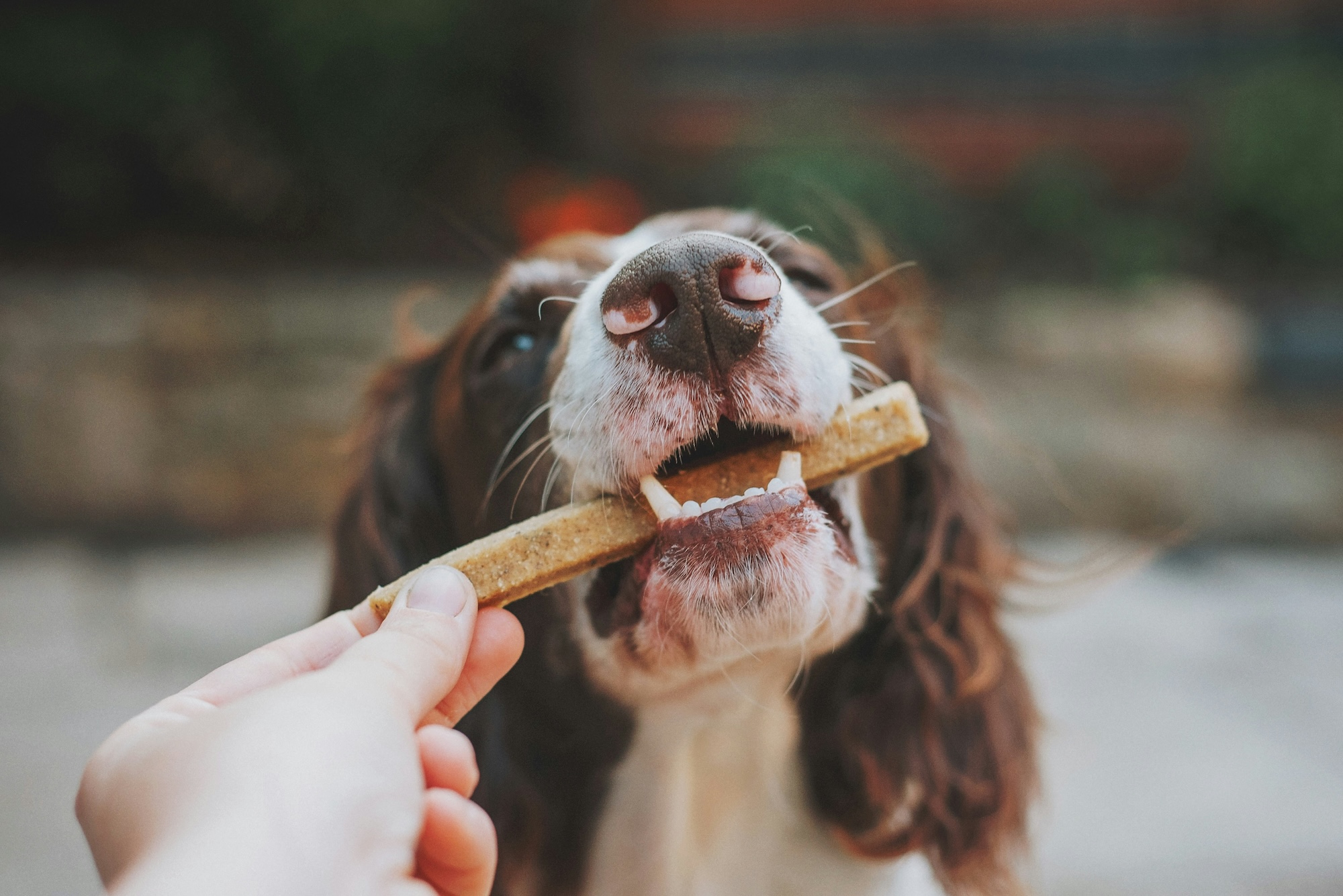
- Chews can equal a full meal’s calories
- Table scraps are often high in fat and salt
Using part of your dog’s daily food allowance as training rewards can help keep things balanced without cutting out treats altogether.
Portion sizes aren’t always obvious
Feeding guides are a starting point, not a rule.
Portion needs vary based on:
- Age
- Breed
- Neutering status
- Activity levels
- Overall health
Weighing food rather than guessing with a scoop can make a surprisingly big difference.
How to tell if your dog needs less food
Behaviour can sometimes be a better guide than the bowl.
Signs your dog may be eating too much include:
- Weight gain despite regular exercise
- Slower movement or reluctance to play
- Heavy breathing after mild activity
- Sleeping more than usual
If you’re unsure, a vet check or weight review is always worthwhile.
Feeding less without guilt
Cutting back doesn’t mean cutting out care.
Ways to reduce intake gently:
- Slightly reduce portion sizes
- Swap high-calorie treats for healthier options
- Increase mental enrichment instead of food rewards
- Keep feeding routines consistent
Dogs adapt far more easily than we expect, especially when routines stay predictable.
A healthier approach to feeding
Avoiding overfeeding dogs isn’t about strict rules or deprivation. It’s about balance, awareness and long-term wellbeing.
Feeding the right amount helps your dog to:
- Stay mobile and comfortable
- Maintain energy and enthusiasm
- Avoid preventable health issues
- Enjoy a better quality of life
A healthy weight is one of the simplest, most powerful gifts you can give your dog.
