



The Flat Coated Retriever
Historical Background
The Flat Coated Retriever traces its origins back to the mid-19th century in the United Kingdom. Bred initially as a gamekeeper’s dog, this breed was designed to retrieve both from land and water, making it an ideal choice for hunting enthusiasts. The breed’s ancestry includes the St. John’s Dog, now known as the Labrador Retriever, and various other types of setters and spaniels. Over the years, the Flat Coated Retriever has gained popularity as both a working dog and a cherished companion.
Description and Group Classification
The Flat Coated Retriever is classified within the Gundog group. This breed is renowned for its streamlined silhouette, long head, and well-feathered tail, which adds to its graceful appearance. Its friendly demeanour and keen expression capture the hearts of those who encounter this lovely breed.
Suitability to Various Lifestyles and as a Family Dog
Flat Coated Retrievers are adaptable, fitting well into both active families and those who enjoy the outdoors. Their friendly and patient nature makes them excellent companions for children and other pets. However, their need for companionship means they might not suit families who are often away from home for extended periods.
Ideal Home Environment
While the Flat Coated Retriever is versatile, they thrive in environments where they have space to move and play. They can adapt to town living if provided with sufficient exercise but ideally suit country living where they have access to open spaces.
Training Requirements
Training should begin early to instil good manners and social skills. The Flat Coated Retriever responds best to positive reinforcement methods, such as treats and praise. Consistency and patience are key, as their playful nature can sometimes lead to distraction.
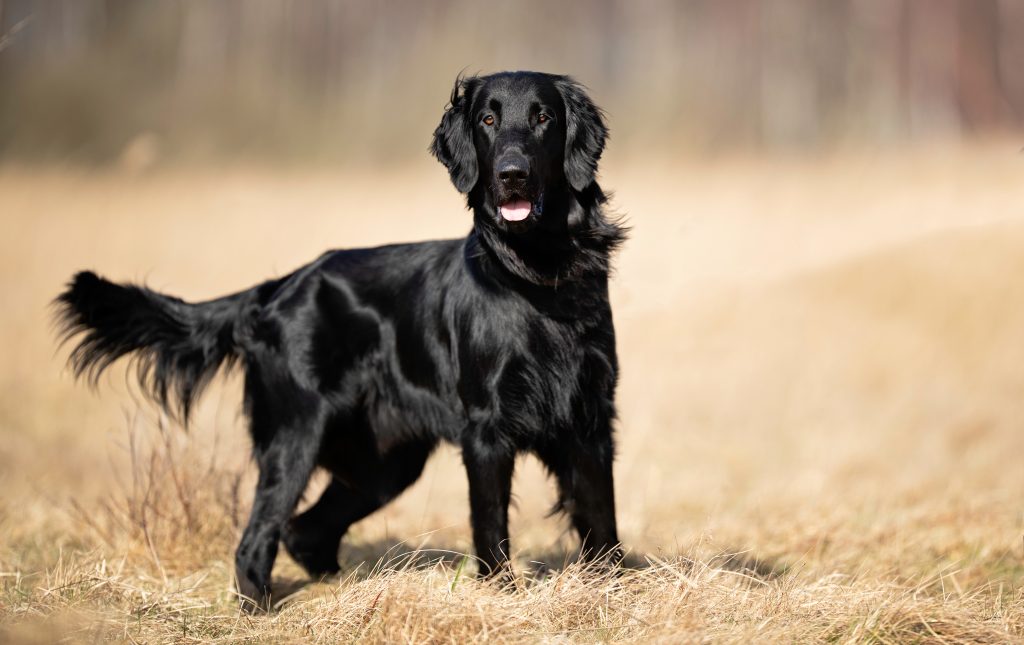
Breed Size and Colours
The Flat Coated Retriever is a medium to large-sized breed, with males standing between 58-61 cm at the shoulder and females slightly smaller. They typically weigh between 25-36 kg. The breed is known for its glossy, flat-lying coat, which comes in either black or liver.
This breed typically enjoys a lifespan of around 10 to 14 years. With proper care and attention, these dogs can lead long, healthy lives.
Temperament and Personality Traits
The Flat Coated Retriever is famed for its cheerful and outgoing nature. Often described as forever young, they retain their playful spirit well into adulthood. This breed thrives on human companionship and is known for its gentle and patient demeanour, making it a wonderful choice for families with children.
An energetic breed, the Flat Coated Retriever requires ample exercise to keep them happy and healthy. Daily walks, play sessions, and opportunities to run freely in a secure area are essential. They also enjoy swimming, which taps into their natural retrieving instincts.
The breed’s glossy coat requires regular grooming to maintain its condition and minimise shedding. A thorough brush once or twice a week should suffice, with more frequent grooming needed during shedding seasons. Regular ear checks and dental care are also important to ensure overall health.
Health
Flat Coated Retrievers are generally healthy but, like any breed, are prone to certain health conditions. Potential health concerns include hip dysplasia, progressive retinal atrophy, and certain cancers. Regular veterinary check-ups and a healthy diet are crucial for early detection and management of these issues.
In summary, the Flat Coated Retriever is a loving and lively breed, well-suited to active families who can provide the attention and exercise they crave. With their affectionate nature and gentle temperament, they truly make a delightful addition to the right home.
