


Cherry Eye, what it is and treatments available
Welcome to our article on Cherry eye in dogs, Here we will explain what cherry eye is and the treatment that is currently available. Dogs and cats have what is known as a third eyelid, which is there to protect the eye and lubricate it.
The third eyelid contains a gland called the Nictitating Gland or Membrane, which is responsible for lubricating the eye and spreading tears (between 40-50% of tear production). It is this membrane that can prolapse (dislodges from its normal position) and pops out above the third eyelid in the corner of the eye and looks like a cherry, which is how it earned its more common name of cherry eye.
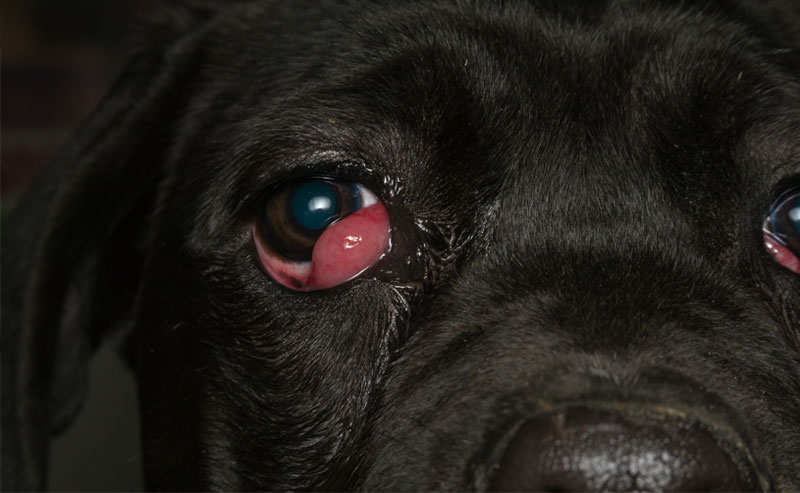
Cherry Eye
There are a couple of reasons why this membrane prolapses, the first is due to the ligament that holds it in place.The membrane is anchored to the eye socket by a ligament, in some breeds of dog this ligament is very weak and allows the membrane to prolapse, another reason is due to inflammation. Whilst the dislodged membrane isn’t painful it is not able to lubricate the eye effectively which can cause problems. The eye can be itchy so the dog will rub it, which can cause corneal abrasions on the eye itself. The longer the membrane is prolapsed the increased chance of problems like conjunctivitis occurring.
Cherry eye is thought to run in families and is more prevalent in the following breeds:
- Bulldog
- Beagles
- Cocker Spaniels
- Bull Mastiffs
- Saint Bernards
- Shih Tzu
- Great Dane
- Shar Pei
Treatment
The treatment for cherry eye has changed over the years, many years ago when cherry eye occurred vets would remove the nicitating membrane but this led to problems like dry eye further down the line. These days Vets will first treat with anti-inflammatory eye drops to remove any inflammation in the membrane before surgery, thus returning the nictitating membrane to it’s normal size. The Vet will then create a pocket in the inner part of the third eyelid itself put the membrane in and then stitch the little pocket closed with dissolving stitches. The other method is to stitch the membrane onto the occipital bone
We hope you found our article on Cherry eye in dogs interseting and useful.
We found this article from The Blue Cross on cherry eye for further reading.
Disclaimer: The contents of Itsadogz.life website are for informational and educational purposes only and should NOT replace professional Veterinary Advice. Always consult a qualified Veterinarian regarding your dog’s health and any concerns you may have.
Neither the owners nor creators of this site are engaged in providing veterinary medical services via this site and assume no responsibility for any consequence relating directly or indirectly to any action you take or do not take based on the information, services, products, or other materials provided on this site.
