



Canine Pulmonary Fibrosis: What You Need to Know
Welcome to our article on Canine pulmonary fibrosis (CPF), we’ll explore the ins and outs of canine pulmonary fibrosis. We’ll look at its causes, including genetic predisposition and other factors that contribute to lung disease in dogs. We’ll also discuss how to spot the signs, from persistent coughs to exercise intolerance and examine various treatment options available. Additionally, we’ll address the question on many pet owners’ minds: is pulmonary fibrosis terminal?
Understanding Canine Pulmonary Fibrosis
Definition and Causes
Canine pulmonary fibrosis is a lung disease characterised by chronic and progressive changes in lungs structural integrity. It causes scarring, stiffening, and thickening of the lungs, leading to respiratory distress and impaired oxygenation. The condition can result from chronic injury and healing of lung tissue due to various factors, including pneumonia, chronic bronchitis, EBP/PIE, congestive heart failure, and environmental pollutants. In some cases, the cause remains unknown, resulting in idiopathic pulmonary fibrosis.
Breeds at Risk
West Highland White Terriers are the breed most affected by pulmonary fibrosis (also known as Westie Lung). Other terrier breeds, such as Jack Russell and Staffordshire terriers, also have an increased risk of developing the disorder. Poodles are at a slightly higher risk as well. The typical age of onset is around 9 years, with increased age contributing to the disorder’s development.
Progression of the Disease
Pulmonary fibrosis progresses gradually, replacing normal lung tissue with fibrotic tissue. This process results in diffusion impairment, making it increasingly difficult for affected dogs to breathe. The prognosis is guarded, with many dogs succumbing to progressive lung failure within 12-18 months of diagnosis. However, dogs that are less severely affected at the time of diagnosis may have a longer survival time.
Recognising the Symptoms
Common Signs
Dogs with canine pulmonary fibrosis often show exercise intolerance and rapid respiratory rates. As the disease progresses, respiratory distress becomes evident. Owners may notice abnormalities for up to a year before diagnosis, as early signs can be subtle and mistaken for normal aging. Physical examination typically reveals loud “crackles” upon listening to the chest with a stethoscope, along with increased respiratory rate and effort. Some dogs may also have a heart murmur.
Diagnostic Tests
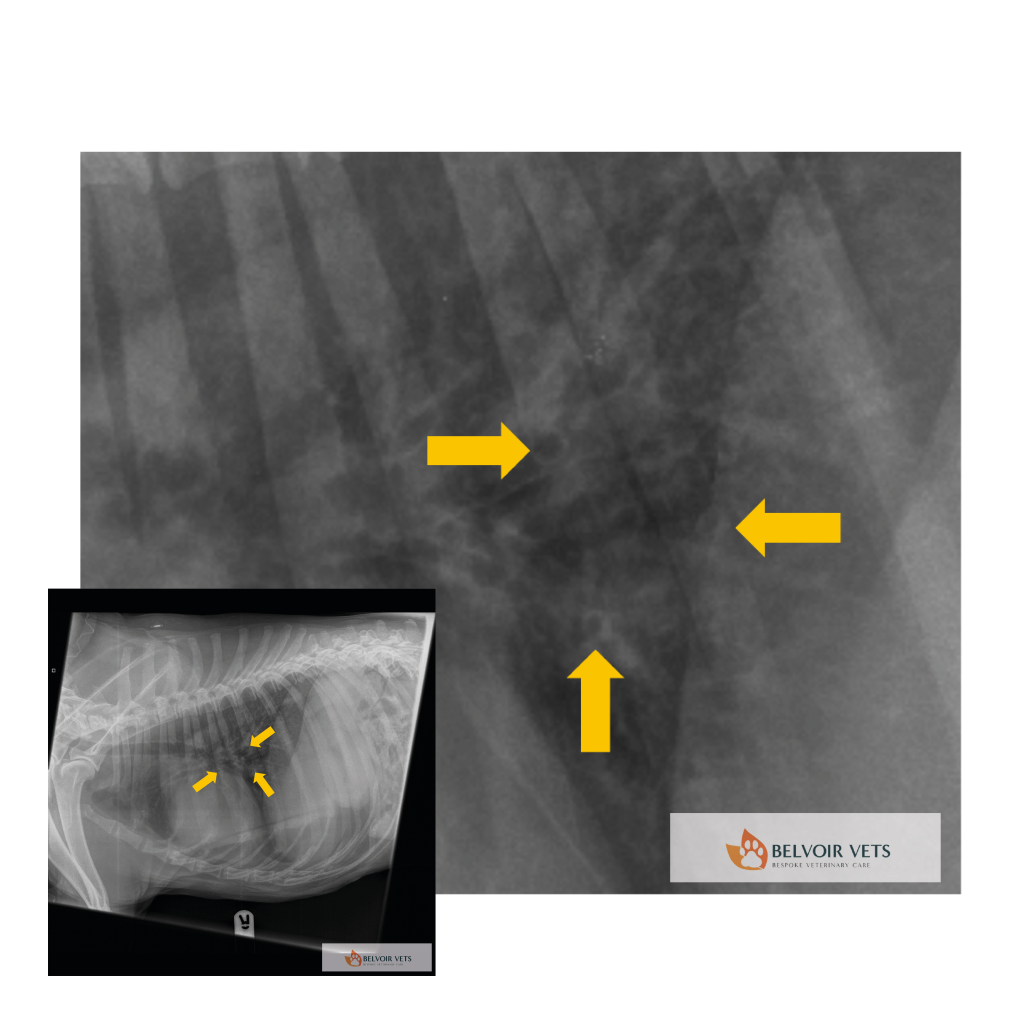
Chest x-rays usually show a heavy interstitial pattern without signs of infection or heart failure (see x-ray). Blood tests can rule out infectious causes. Bronchoscopy helps exclude chronic bronchitis and collect cells for cytologic examination. Ultrasound provides information about fibrosis degree and arterial function. CT scans of the chest offer detailed insights into fibrosis extent. The arrows on the x-ray show calcium deposits in the lungs that are associated with CPF. Think of the calcium deposits as doughnuts so air can still pass through, but the tube is narrowed, so less air entry and oxygen diffusion.
Differentiating from Other Conditions
Pulmonary fibrosis symptoms can mimic other respiratory conditions. Initially, affected dogs may be suspected of having congestive heart failure or pneumonia. Diagnosis requires a high degree of suspicion, as pulmonary fibrosis is often detected only after failure to improve following therapy for more common conditions.
Treatment Options and Management
Medical Interventions
While there’s no cure for canine pulmonary fibrosis, vets focus on symptom management. Corticosteroids may be prescribed to reduce inflammation, typically at anti-inflammatory doses of 0.5-1mg/kg/day. Oxygen therapy is crucial for acute treatment, improving the low oxygen levels in the blood also known as hypoxemia, and reducing pulmonary hypertension (high blood pressure in the blood vessels that supply the lungs (pulmonary arteries). Bronchodilators like theophylline can help increase lung aeration. For cough relief, antitussive drugs such as hydrocodone or butorphanol are often used. In cases of pulmonary hypertension, sildenafil may be recommended, though it can be costly.
Lifestyle Adjustments
Dogs with pulmonary fibrosis should be allowed to self-limit their activity. Weight loss can help decrease breathing difficulties, so dietary changes may be necessary.
Prognosis and Life Expectancy
The prognosis for canine pulmonary fibrosis is guarded. Many dogs succumb to progressive lung failure within 12-18 months of diagnosis. However, dogs less severely affected at the time of diagnosis may have a longer survival time. The average life expectancy is about one year after diagnosis, but this can vary depending on the individual case and treatment response.
Disclaimer: The contents of Itsadogz.life website are for informational and educational purposes only and should NOT replace professional Veterinary Advice. Always consult a qualified Veterinarian regarding your dog’s health and any concerns you may have.
Neither the owners nor creators of this site are engaged in providing veterinary medical services via this site and assume no responsibility for any consequence relating directly or indirectly to any action you take or do not take based on the information, services, products, or other materials provided on this site.
