


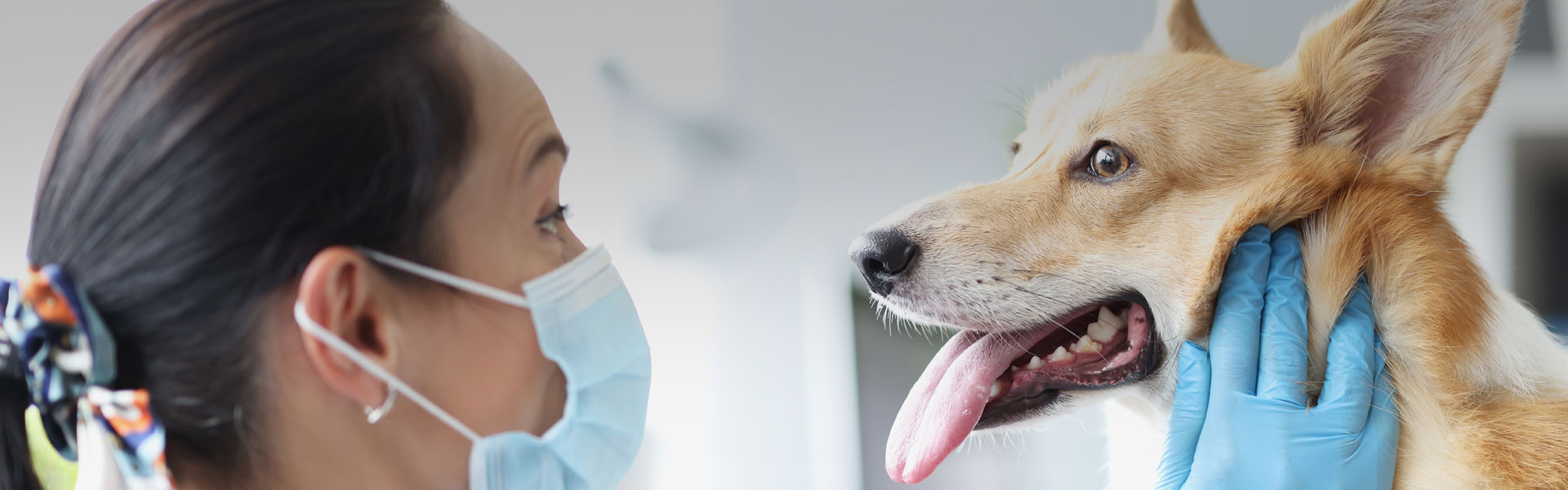
What is Addison's Disease?
Addison’s Disease in dogs (also called Hypoadrenocorticism), is a lifelong condition and potentially life-threatening. There are two types of Addison’s disease, Primary and Atypical, Primary Addison’s is where the entire adrenal glands produce inadequate amounts of the two hormones Glucocorticoids, the body’s natural form of the steroid Cortisone and Mineralocorticoids (Aldosterone) – these help to control the body’s concentration of sodium and potassium. The adrenal glands sit just above the kidneys, and they control the release of cortisol and Aldosterone. Cortisol controls the digestion of fats and protein and controls blood sugar, and it comes from the inner cortex of the adrenal glands. Aldosterone comes from the outer cortex and controls electrolytes (sodium and potassium).

Aldosterone tells the kidneys to absorb sodium, which maintains blood pressure. When the adrenals are not working, the kidneys stop retaining sodium, so blood pressure falls, (because sodium in the blood causes more water to be retained and keeps blood volume up), and the Potassium rises (which causes the heart to slow and beat inefficiently). All these things happen when a dog has Addison’s, and they are very ill, and it is an emergency situation.
Below are some of the main functions of the glucocorticoids and the mineralocorticoids:
- Maintaining the sodium/potassium balance
- Maintaining the structural integrity and function of blood cells
- Regulating both blood pressure and flow to vital organs such as the kidneys
- Controlling blood sugar levels and carbohydrate metabolism
- Helping to maintain the function of the immune system
- Helping to counteract the effects of stress.
Primary Addison’s is when the body or more specifically the adrenal glands produce inadequate amounts of these two hormones to circulate around the body (too much Glucocorticoids is a different disease called Cushing’s, although the ACTH Stim test will show whether it is Addison’s or Cushing’s, it will also rule both out as well).
Atypical is where certain zones of the Adrenal Cortex don’t produce enough cortisol (Atypical only affects the production of Cortisol, the Glucocorticoids level remains normal).
What are the symptoms of Addison’s Disease in dogs?
The main symptoms of Primary Addison’s are very varied and can come and go, signs to watch out for are:
- Vomiting
- Weight loss
- Lethargy
- Anorexia
- General weakness
- Increased drinking
- Increased weakness
Atypical Addison’s Symptoms:
- Increased thirst
- Increased urination
- Slow heart rate
- Weak pulse
- Diarrhoea
- Vomiting
- Sleepiness/lethargy
- Loss of appetite
- Weight loss
- Abdominal pain
- Shivering or shaking
- Dehydration
- Shock (low blood pressure, cold extremities, extreme lethargy and collapse).
Addison’s is widely known as the ‘Great Pretender’ because can be hard to diagnose in the beginning as many of the symptoms are non-specific and can mimic other illnesses, such as Inflammatory Bowel Disease In Dogs. As the symptoms come and go, and because they are so varied Addison’s isn’t always diagnosed until the dog has an Addison’s Crisis. As Addison’s can mimic other diseases, don’t be afraid to seek a second opinion if you don’t feel comfortable with the first one.
Diagnosis
This is generally done with a combination of ultrasound and blood tests, once Addison’s is suspected Vets will perform a test called ACTH Stimulation Test (also referred to as the ACTH Stim Test), it is this test that confirms or disproves Addison’s (and also Cushing’s Disease).
What is the ACTH Stimulation Test?
Your vet will most likely admit your dog for the duration of the test so that any stress your dog is experiencing can be reduced (if your dog gets really stressed when visiting the vets, then they’ll most probably ask you to wait with your dog in the car for the duration of the test). Your vet will take a small amount of blood before the ACTH test so they can have a ‘baseline’ cortisol level The ACTH test is where a small amount of ACTH (Adrenocorticotropic hormone) is administered in the form of an injection. Once the injection has been administered, there is a waiting period of 1 to 2 hours before blood is taken again to measure the cortisol level and compare it against the baseline levels taken at the beginning. Once the ACTH is injected then with Addison’s the body will not be able to react adequately to ACTH so when the two cortisol levels (baseline and 1 or 2 hours after the injection) are compared there will not be a significant rise in the cortisol levels. It is worth noting that with Cushing’s (see Cushing’s article), the ACTH stim test will cause the adrenal glands to release unusually high levels of cortisol.
Treatment
As many dogs don’t present with Addison’s until they are often suffering from dehydration, they will generally be admitted for fluids whilst the vet continues to run tests. Addison’s is treated by using steroids to replace cortisol, but it is only needed in very small doses, too much causes weight gain, high blood sugar, liver damage, excess drinking and urinating, and a predisposition to diabetes. When it’s used for Addison’s, it is a hormone replacement, hence only a low dose is required, and should be given EVERY day.
Zycortal / Percorten replaces Aldosterone, Zycortal is actually lots of tiny crystals suspended in a liquid, which sits under the skin, and slowly releases Aldosterone replacement (Deoxycorticosterone pivalate – DOCP for short) over a long period. Zycortal tells the kidneys to retain Sodium, and because sodium and Potassium work like a see-saw, when sodium goes high Potassium goes low. Michigan State University has done some research (Vincent AM et al. 2021) that indicates that most dogs do well on half the starting dose of DOCP, so 1mg/kg. Because the makers of Zycortal recommend the higher starting dose, some vets are reluctant to follow the low dose protocol, so a good way to reduce the dose, is to test at around 26 days, and if the Potassium is not in the middle of the reference range, and Sodium is well above the middle of its reference range, refuse another dose and test again weekly, until it is.
When both potassium and sodium are within the published reference ranges, another injection can be given, but a significant reduction in dose should be made, depending on how many weeks you have waited past the 28-day mark. After making a significant reduction in dose, electrolytes should always be tested at 10 days. The aim would be to inject just enough Zycortal that by the end of the month, both the sodium and the Potassium are within their reference ranges, which means that sodium is beginning to fall, and Potassium is beginning to rise, showing that another injection is needed.
References:
https://cvm.msu.edu/assets/images/hospital/2021-JVIM-DOCP-RCCT.pdf
Vincent AM, Okonkowski LK, Brudvig JM, et al. Low-dose desoxycorticosterone pivalate
treatment of hypoadrenocorticism in dogs: A randomized controlled clinical trial. J Vet Intern Med. 2021;35(4):
1720–1728. https://doi.org/10.1111/jvim.16195
Disclaimer: The contents of Itsadogz.life website are for informational and educational purposes only and should NOT replace professional Veterinary Advice. Always consult a qualified Veterinarian regarding your dog’s health and any concerns you may have.
Neither the owners nor creators of this site are engaged in providing veterinary medical services via this site and assume no responsibility for any consequence relating directly or indirectly to any action you take or do not take based on the information, services, products, or other materials provided on this site.
