


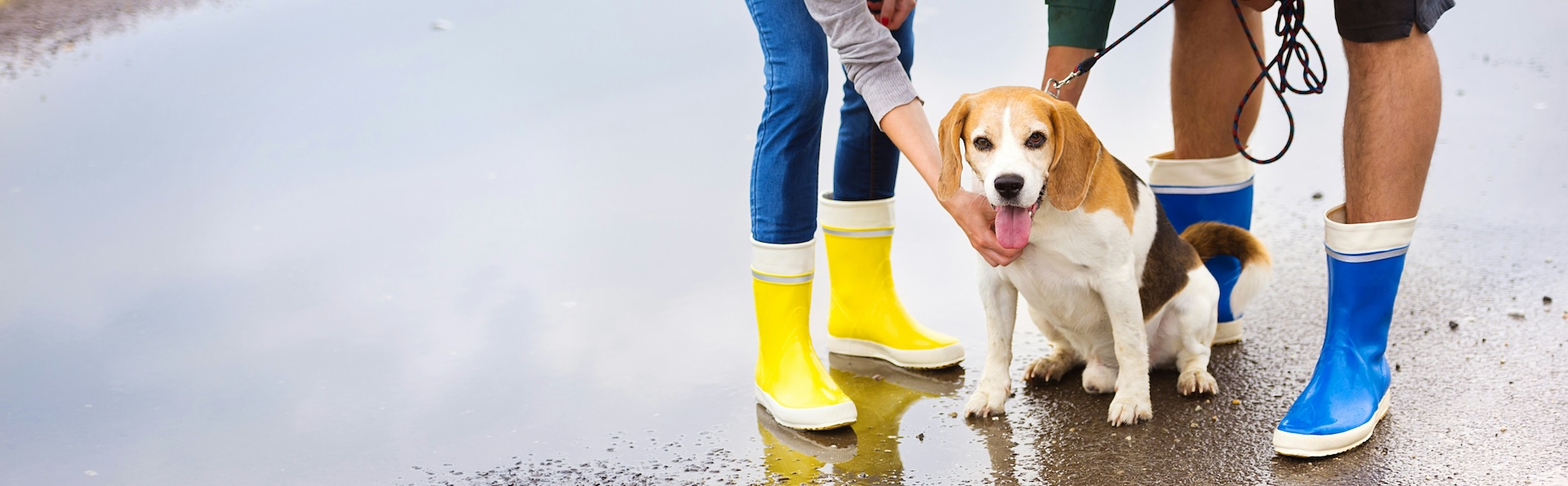
From pavements to parks and puddles
As the seasons shift and daylight stretches a little further each day, dog walks start to look and feel different. Early spring brings brighter mornings, softer ground and plenty of tempting puddles, but it also comes with its own set of challenges. These dog walking tips are designed to help you make the most of seasonal walks while keeping your dog safe, comfortable and happy.
Watch the pavements as temperatures change
Pavements can be surprisingly tricky at this time of year. While they’re rarely hot in early spring, they can still swing between cold, damp and suddenly warm.
A few things to keep in mind:
- Cold mornings can mean slippery surfaces
- Damp pavements may aggravate sensitive paws
- Grit and debris left from winter can linger
If your dog seems reluctant on harder surfaces, try mixing pavement walking with grass or park paths where possible.
Parks come alive but so do distractions
Spring parks are full of new smells, wildlife and people enjoying the outdoors again. While this can make walks more stimulating, it can also test focus and recall.
Helpful dog walking tips for parks include:
- Keeping leads on until your dog has settled into the walk
- Practising recall away from busy areas first
- Allowing sniffing time to help dogs process new scents
Sniffing isn’t wasted time. It’s mentally enriching and can help calm excitable behaviour.
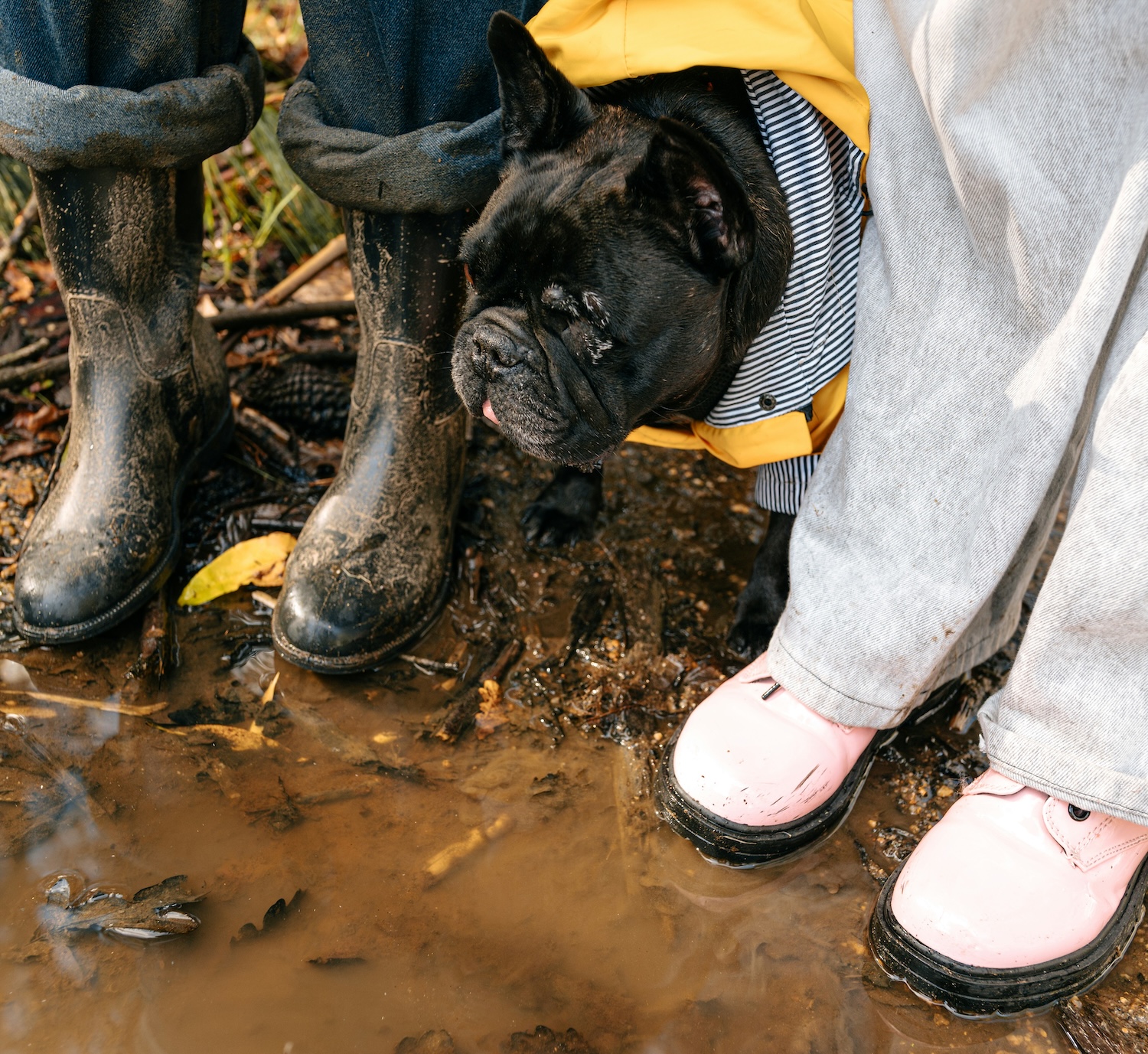
Puddles are fun, filthy and sometimes risky
Few things delight dogs more than a good puddle. Unfortunately, not all puddles are harmless.
It’s best to:
- Discourage drinking from standing water
- Rinse paws after muddy walks
- Watch for excessive paw licking afterwards
While splashing is part of the joy of seasonal walks, keeping an eye on what your dog is interacting with helps avoid irritation or stomach upsets.
Make walks enjoyable, not rushed
Spring walking doesn’t need to be about covering more distance. Quality matters more than quantity.
Try these:
- Letting your dog set the pace occasionally
- Exploring new but quiet routes
- Ending walks on a calm, positive note
Dogs don’t experience seasons the way we do, they experience moments. A calm, engaging walk often beats a long, overstimulating one.
Adjust walk timing as daylight improves
Longer days offer flexibility, but early spring weather is unpredictable.
Consider the following:
- Earlier walks if afternoons warm up quickly
- Shorter, more frequent walks instead of one long outing
- Quieter times of day if your dog finds busy paths overwhelming
These dog walking tips are especially useful for older dogs or those returning to longer walks after a quieter winter.
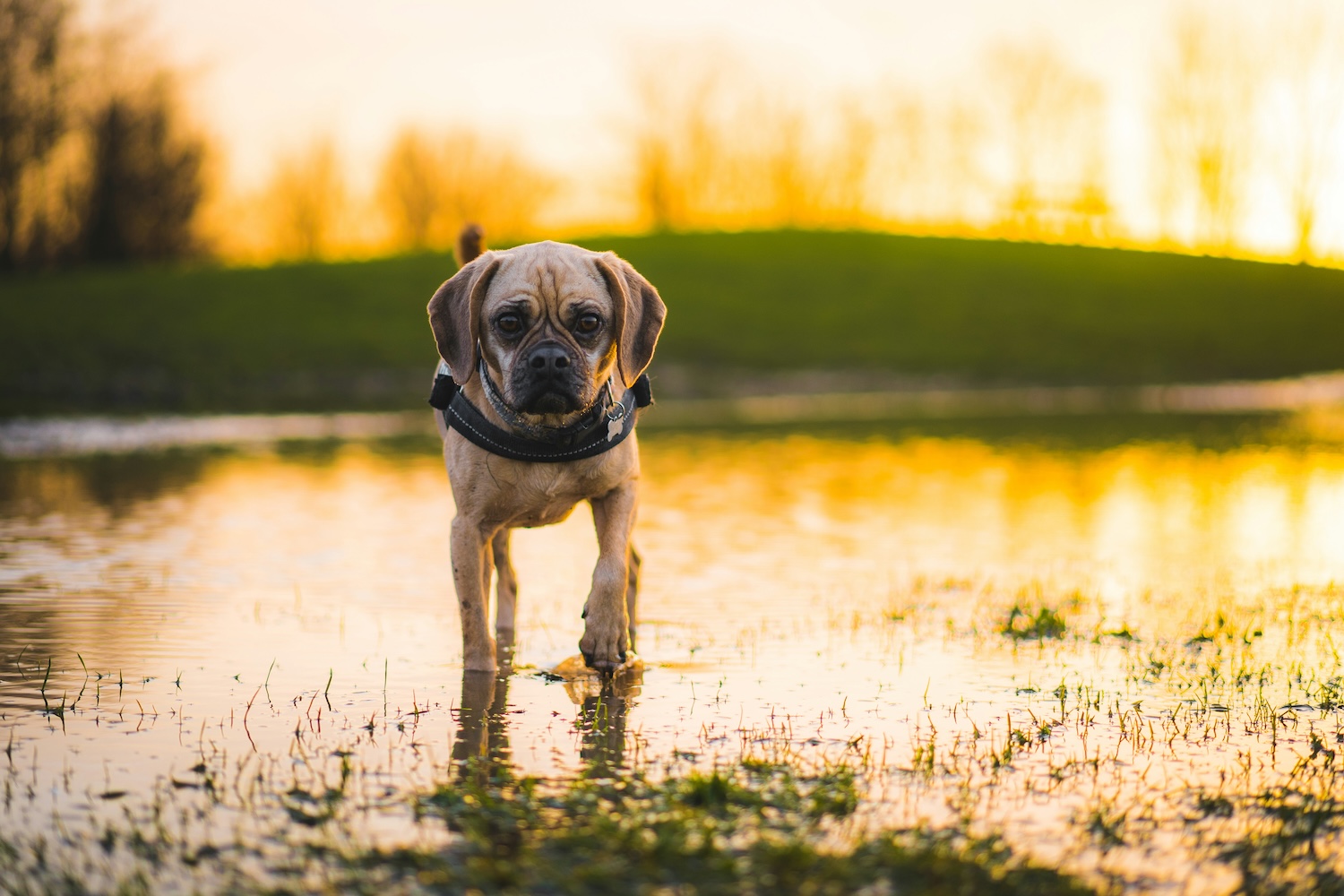
Mud happens, so plan for it
Mud is unavoidable during seasonal change. Rather than fighting it, planning ahead makes life easier.
Simple solutions include:
- Keeping towels by the door
- Using a shallow tray or bowl to rinse paws
- Choosing routes with better drainage after heavy rain
Reducing post-walk stress helps both you and your dog enjoy outings more.
Pay attention to joints and movement
Cool, damp conditions can linger well into spring and may affect dogs with joint stiffness or reduced mobility.
Look out for:
- Slower starts to walks
- Stiffness after resting
- Hesitation on steps or slopes
A gentle warm-up and slower pace at the beginning of walks can make a real difference.
Balance freedom with safety
Seasonal walks often tempt owners to give dogs more freedom, but spring hazards can be subtle.
Good dog walking tips include:
- Keeping dogs on leads near roads and wildlife
- Watching for garden chemicals near pavements and parks
- Being mindful of cyclists and runners returning to paths
Awareness keeps walks relaxed rather than reactive.
Walking confidently into the new season
With a little planning and awareness, seasonal walks can be some of the most rewarding of the year. By adjusting routes, timings and expectations, these dog walking tips can help you navigate pavements, parks and puddles with confidence.
Early spring is about rediscovering the joy of getting outside together, muddy paws, fresh air and all.
