



The Nova Scotia Duck Tolling Retriever
Historical Background
The Nova Scotia Duck Tolling Retriever, affectionately referred to as the “Toller,” originates from the Canadian province of Nova Scotia. This breed was developed in the early 19th century, primarily for the unique purpose of “tolling” waterfowl. The term “tolling” refers to the clever technique of luring ducks and geese closer to hunters by imitating the playful movements of foxes. Hunters observed that wild foxes would captivate the attention of waterfowl by darting along the shoreline, prompting curious birds to move closer to investigate.
In an effort to harness this natural behaviour, breeders selectively combined various breeds such as spaniels, retrievers, and possibly setters and collies, to create the Toller. These dogs were not only adept at tolling but also skilled at retrieving downed birds from icy waters, making them incredibly versatile hunting companions. Official recognition came later, with the Canadian Kennel Club (CKC) recognising the breed in 1945. Today, the Toller has gained global appreciation, not only for its historical hunting role but also for its engaging personality and adaptability.
Description and Group Classification
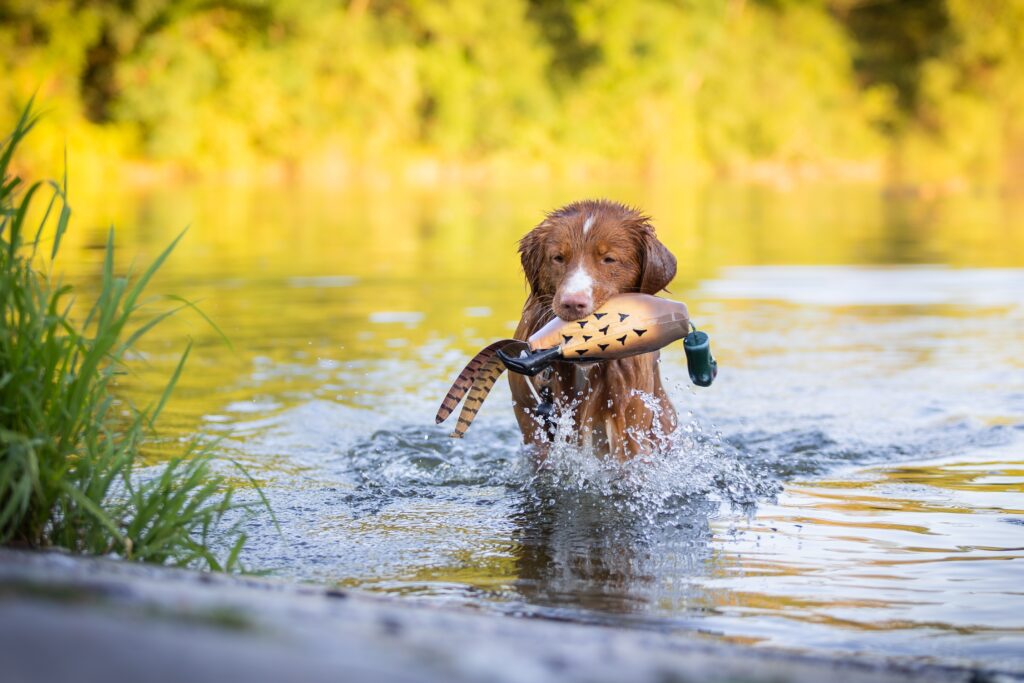
The Nova Scotia Duck Tolling Retriever is a medium-sized breed with an athletic and balanced build. It is immediately recognisable by its bright, reddish coat and intelligent, expressive eyes. Their dense double coat is water-repellent, helping them thrive in the cold and wet conditions of their original hunting environment. They are often mistaken for smaller Golden Retrievers, but Tollers have a more compact and agile frame.
In terms of behaviour, Tollers are highly energetic and intelligent, with a strong drive to work and please their owners. Their playfulness and enthusiasm make them natural athletes, whether they are chasing a ball or swimming in a lake. This breed belongs to the “Gundog Group” in most kennel club classifications, reflecting its strong retrieving instincts and working history.
Suitability to Various Lifestyles and as a Family Dog
Tollers are wonderfully adaptable and can fit into a variety of lifestyles. They thrive in active households, particularly those with individuals or families who enjoy outdoor activities like hiking, running, or swimming. As a family dog, the Toller is affectionate, loyal, and great with children. Their high energy and love for play make them an excellent choice for families with kids who enjoy engaging with their pet.
However, prospective owners should be aware that this breed’s intelligence and energy require consistent mental and physical stimulation. They may not be the best fit for households with a sedentary lifestyle or for owners who are unable to dedicate time to their exercise and training needs.
Ideal Home Environment
Tollers are adaptable to both town and country living, provided their exercise and mental stimulation requirements are met. In rural or suburban settings, they truly shine, enjoying large outdoor spaces where they can run and play. A securely fenced garden is essential, as their curious nature and keen prey drive may lead them to wander off in pursuit of an interesting scent.
In urban environments, Tollers can still thrive as long as they have regular access to outdoor spaces like parks. However, urban owners will need to commit to providing plenty of daily activity and enrichment to ensure their dog remains happy and healthy. Regardless of the setting, the Toller’s ideal home is one where they can be an integral part of the family and enjoy plenty of attention and interaction.
Training Requirements
Highly intelligent and eager to please, Tollers are a dream to train for those willing to put in the time and effort. They respond best to positive reinforcement methods, such as treats, praise, and play. Their intelligence means they pick up commands quickly, but it also means they can become bored easily. Training sessions should be varied, engaging, and kept relatively short to maintain their interest.
Socialisation is also crucial, especially during puppyhood. Introducing them to different people, animals, and environments helps ensure they grow into confident and well-mannered adults. Owners should also keep in mind that Tollers are sensitive and may not respond well to harsh training methods or overly stern handling.
Breed Size and Colour
The Nova Scotia Duck Tolling Retriever is considered a medium-sized dog. Adult males typically stand between 48–51 cm (19–20 inches) at the shoulder, while females are slightly smaller, at 45–48 cm (18–19 inches). Their weight generally ranges from 17–23 kg (37–50 pounds), with variations depending on the individual dog’s build and activity level.
The breed’s coat is one of its most striking features. It comes in shades of red or orange, often with white markings on the chest, feet, face, or tail tip. The Toller’s coat is dense and water-repellent, perfectly suited to its original purpose as a waterfowl retriever.
The average lifespan of a Nova Scotia Duck Tolling Retriever is 12–14 years. With proper care, including a balanced diet, regular exercise, and routine veterinary check-ups, many Tollers live healthy and active lives well into their senior years. As with any breed, individual lifespan may vary based on genetics, lifestyle, and overall health.
Temperament and Personality Traits
Tollers are known for their playful and affectionate nature. They bond deeply with their families and often display a cheerful enthusiasm that is infectious. While they can be reserved with strangers, they are rarely aggressive and typically warm up once they feel comfortable.
This breed thrives on companionship and may not do well if left alone for long periods. They enjoy engaging with people, whether through play, training, or simply spending time together. Their interactions with other dogs and pets are usually positive, although early socialisation is key to ensuring good manners.
This is a high-energy breed that requires at least an hour of vigorous exercise each day. Activities like running, swimming, fetch, or agility training are perfect for keeping a Toller both physically and mentally stimulated. Given their hunting background, they excel in tasks that involve retrieving and problem-solving.
In addition to structured exercise, Tollers enjoy having the opportunity to explore and play. Interactive toys and games can also help keep them entertained, especially when outdoor exercise is limited.
The Toller’s coat requires moderate grooming to keep it in good condition. Weekly brushing is usually sufficient to remove loose hair and prevent tangles, but during shedding seasons (spring and autumn), more frequent brushing may be necessary.
Their ears should be checked regularly for signs of dirt or infection, and their nails should be trimmed as needed. As a water-loving breed, Tollers may need occasional baths to keep their coat clean, especially if they’ve been swimming in muddy or salty water.
Health
While generally healthy, the Nova Scotia Duck Tolling Retriever is prone to certain breed-specific health conditions. These include hip dysplasia, progressive retinal atrophy (PRA), and Addison’s disease. Responsible breeders conduct health screenings to minimise the risk of passing on these conditions.
Routine veterinary care, a nutritious diet, and regular exercise can go a long way in preventing many health issues. Owners should also monitor their Toller’s weight, as obesity can exacerbate joint problems and other health concerns.
