



The Curly Coated Retriever
Historical Background
The Curly Coated Retriever is one of the oldest retriever breeds, with its origins dating back to at least the late 18th century. Believed to be a combination of the now-extinct English Water Spaniel, the Poodle, and perhaps the Irish Water Spaniel or Labrador, the breed was developed to excel as a versatile hunting dog. Its distinctive tightly curled coat provided excellent protection against cold water, making it ideal for retrieving waterfowl in harsh weather conditions.
This breed quickly gained popularity among gamekeepers and sportsmen due to its intelligence, endurance, and skill in the field. By the mid-19th century, the Curly Coated Retriever was a common sight at hunting estates across Britain. It was officially recognised by The Kennel Club in 1854, making it one of the first retriever breeds to receive formal recognition. However, the breed’s popularity began to decline in the 20th century as other retriever breeds, such as the Labrador and Golden Retriever, rose in favour. Despite this, the Curly Coated Retriever has retained a loyal following and continues to charm enthusiasts with its unique look and hardworking nature.
Description and Group Classification
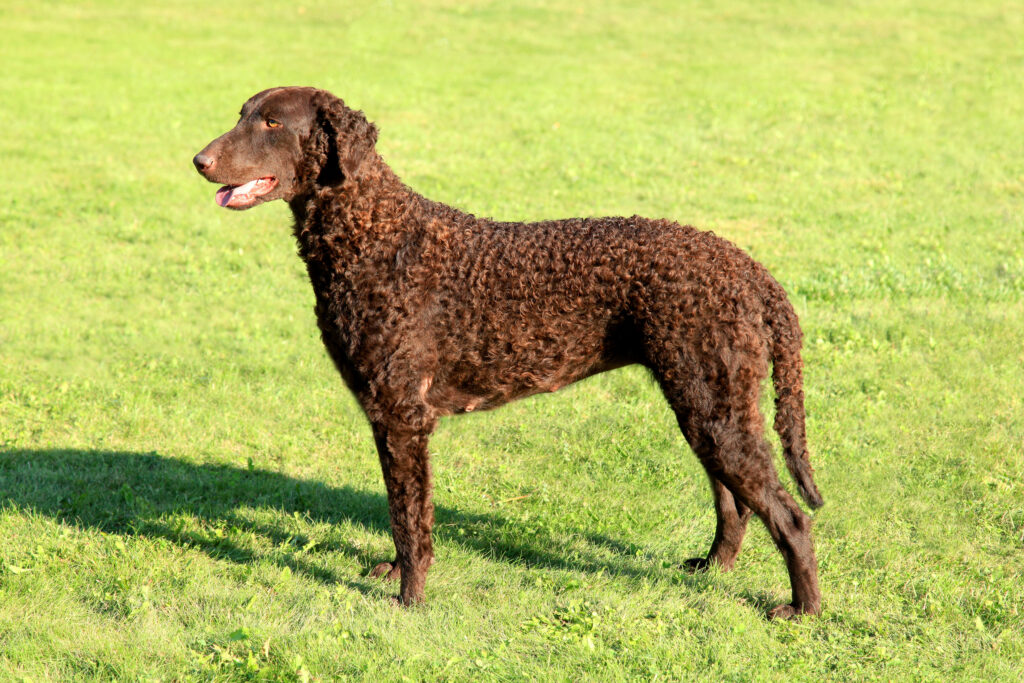
The Curly Coated Retriever stands out as a distinctive and elegant breed, thanks to its unique curly coat that serves both a functional and aesthetic purpose. These tight curls cover the body entirely, protecting the dog from harsh weather and dense undergrowth during fieldwork. The breed’s head is long and slightly wedge-shaped, with a gentle expression conveyed through dark, almond-shaped eyes. The ears are small, set slightly above eye level, and lie flat against the head. The breed’s overall build is athletic and well-balanced, combining strength with grace.
Recognised by major kennel clubs such as The Kennel Club (UK) and the American Kennel Club (AKC), the Curly Coated Retriever belongs to the Gundog Group in the UK and the Sporting Group in the US. These classifications reflect the breed’s original purpose as a working retriever and its continued use in hunting and field trials.
Suitability to Various Lifestyles and as a Family Dog
The Curly Coated Retriever is a versatile breed, capable of adapting to a variety of lifestyles. Its active and intelligent nature makes it an excellent companion for individuals or families who enjoy outdoor activities, such as hiking, running, or swimming. This breed thrives in environments where it can both exercise its body and engage its mind.
As a family dog, the Curly Coated Retriever is known for its affectionate and loyal temperament. It forms strong bonds with its family members and is particularly gentle with children, although supervision is always recommended with very young ones due to the dog’s size and energy. While the breed tends to be friendly and social, its slightly independent streak may mean it requires consistent training and early socialisation to ensure it remains well-mannered in various settings.
Ideal Home Environment
The Curly Coated Retriever is best suited to a home environment that provides space for regular activity and mental stimulation. While the breed can adapt to town living, it truly thrives in the countryside or suburban areas where access to outdoor spaces such as gardens, parks, or open fields is readily available.
In a town or city setting, owners will need to dedicate time to ensure the dog gets sufficient exercise and stimulation to prevent boredom. A secure outdoor area is beneficial, as the breed enjoys exploring its surroundings. Regardless of location, the ideal home environment for a Curly Coated Retriever includes an active and attentive owner or family who can meet its physical and mental needs.
Training Requirements
The Curly Coated Retriever is an intelligent and eager-to-please breed, making it highly trainable, though its independent streak can sometimes pose a challenge. Training should begin early, focusing on positive reinforcement methods to build trust and encourage cooperation. Harsh or punitive methods are counterproductive with this breed and can lead to stubbornness or reluctance to participate.
Socialisation is a crucial aspect of the Curly Coated Retriever’s training. Exposing the dog to various environments, people, and animals from an early age will help it develop into a confident and well-adjusted adult. Additionally, incorporating advanced training or activities such as obedience, agility, or fieldwork can help satisfy the breed’s intellectual and physical needs.
Breed Size and Colours
The Curly Coated Retriever is a large breed, with males typically standing between 66 and 69 cm at the shoulder and females slightly smaller, measuring 61 to 66 cm. The breed’s weight ranges from 32 to 41 kg, depending on sex and build.
The coat colours of the Curly Coated Retriever are limited to solid black or liver (a rich reddish-brown). The curls should be tight and consistent across the body, with minimal feathering on the legs and tail to maintain the breed’s classic appearance.
The average lifespan of a Curly Coated Retriever is approximately 10 to 12 years, though some individuals may live longer with proper care. Factors such as genetics, diet, exercise, and regular veterinary check-ups can all influence a dog’s longevity. Maintaining a healthy weight and addressing health issues promptly can further support the dog’s overall well-being and lifespan.
Temperament and Personality Traits
Curly Coated Retrievers are known for their friendly and outgoing temperament. They are affectionate with their families and often form close bonds with their owners, making them loyal and devoted companions. While generally good-natured, the breed has a slightly independent and reserved side, particularly with strangers, which can make them more aloof than some other retriever breeds.
Their intelligence and playful nature make them entertaining and engaging pets. However, their strong will and occasional stubbornness mean they benefit from experienced owners who can provide consistent training and guidance. The breed’s natural enthusiasm and confidence are some of its most endearing traits.
The Curly Coated Retriever is an active and energetic breed that requires daily exercise to maintain its physical and mental health. At least one to two hours of activity per day is recommended, including walks, runs, or play sessions. The breed particularly enjoys swimming, which is an excellent form of low-impact exercise that plays to its natural strengths.
Mental stimulation is just as important as physical activity. Engaging the dog in training, puzzle toys, or fieldwork can help keep its sharp mind occupied. Without sufficient exercise, the breed may become bored, which could lead to undesirable behaviours such as chewing or excessive barking.
Despite its distinctive coat, the Curly Coated Retriever is relatively low-maintenance in terms of grooming. Its tight curls naturally repel dirt and water, requiring only occasional brushing to remove loose hairs and maintain a tidy appearance. Over-brushing can disrupt the curls, so it’s best to use a gentle approach.
Bathing should be done as needed, typically every few months, unless the dog becomes particularly dirty. Regular checks of the ears, teeth, and nails are also important to ensure overall health and hygiene.
Health
The Curly Coated Retriever is generally a healthy breed, but like all dogs, it is prone to certain genetic health issues. Common conditions include hip dysplasia, elbow dysplasia, and some eye problems such as cataracts or progressive retinal atrophy (PRA). Additionally, the breed has a higher-than-average risk of certain types of cancer, including haemangiosarcoma.
Routine health screenings, such as hip and eye tests, are essential for breeding programmes to reduce the risk of passing on hereditary conditions. Maintaining a balanced diet, providing adequate exercise, and scheduling regular veterinary visits can help keep the breed in optimal health.
