



The Boxer
Historical Background
The Boxer is a breed with a rich and intriguing past, dating back to late 19th century Germany. Bred from the Bullenbeisser, a now-extinct breed used for hunting large game, and the English Bulldog, Boxers were originally developed as versatile working dogs. Their roles included everything from guarding to serving in military and police work. Over time, their loyal nature and energetic spirit made them cherished family companions.
Description and Group Classification
Boxers are members of the working group, recognised for their robust and muscular build. They are medium-sized dogs with a distinctive square muzzle and a powerful, yet elegant appearance. Their athletic frame and expressive faces often give them an air of intelligence and alertness.
Suitability to Various Lifestyles and Family Dog
Boxers can adapt well to different lifestyles, but they flourish in active households where they are part of the family dynamic. Their sociable and protective nature makes them wonderful companions for families with children. However, they might not be ideal for those who lead a very sedentary lifestyle or are away from home for long periods, as they thrive on interaction and activity.
Ideal Home Environment
Boxers can adapt to both town and country living, provided their exercise needs are met. They need space to move around and benefit from a secure garden where they can play safely. In urban settings, access to parks or open spaces is beneficial for burning off their abundant energy.
Training Requirements
Training a Boxer requires patience, consistency, and a positive approach. They are intelligent and eager to please but can also be stubborn at times. Early socialisation and training are crucial to ensure they grow into well-mannered adults. Using rewards-based techniques and keeping sessions short and engaging can yield the best results.
Size and Colours
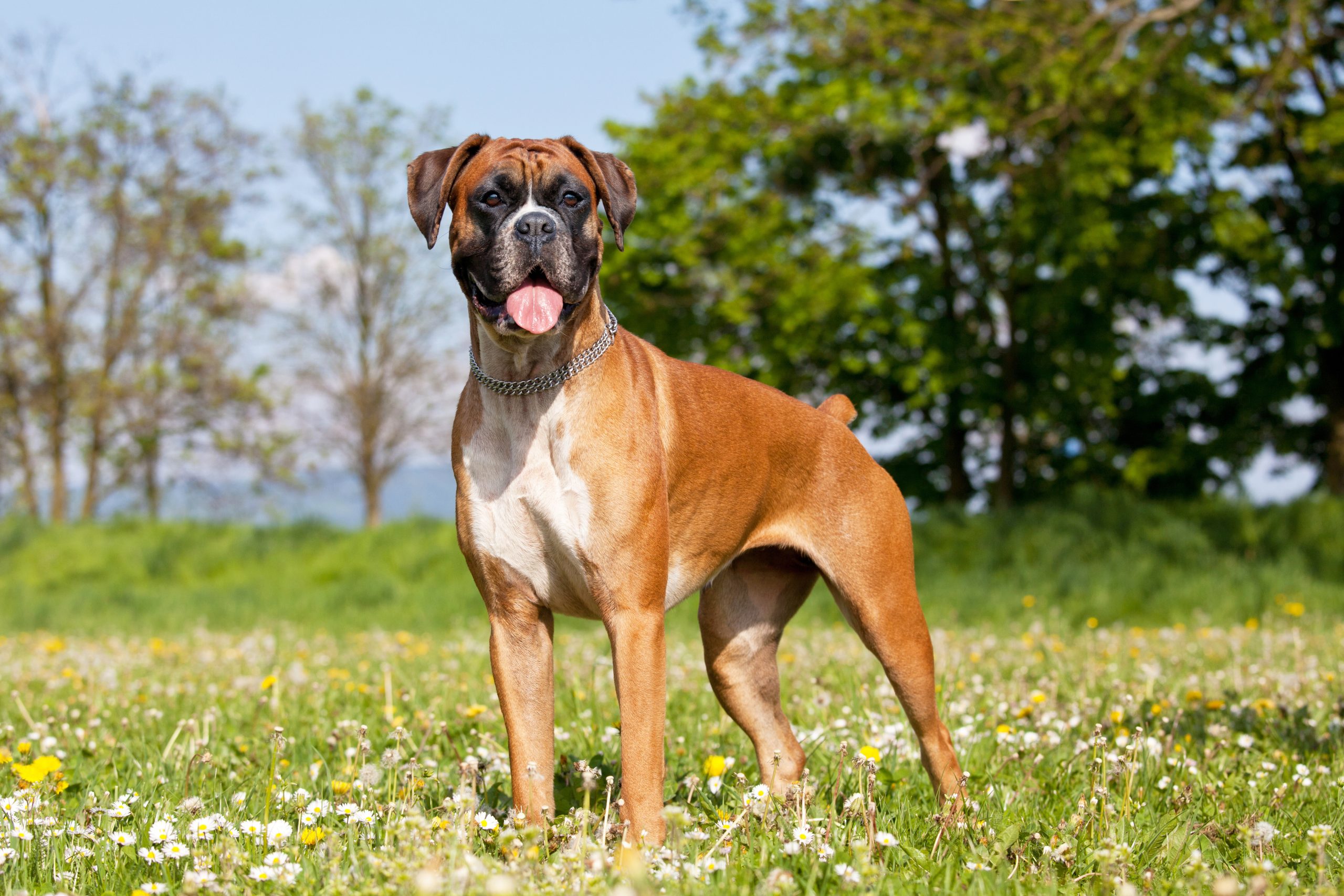
Typically, Boxers stand between 53 to 63 centimetres tall and weigh between 25 to 32 kilograms, depending on gender. They possess a short, sleek coat that can come in several colours, including fawn, brindle, and white. Some Boxers have a black mask on their faces, adding to their striking appearance.
Boxers generally have a lifespan of around 10 to 12 years.
Temperament and Personality Traits
Boxers are known for their playful, spirited nature. They are affectionate, loyal, and often exhibit a protective instinct, making them excellent family pets. Their boundless energy and exuberant personalities mean they love to be involved in family activities. However, they can be a bit boisterous, especially when young, and thrive in homes where they receive plenty of attention and interaction.
Given their energetic disposition, Boxers require a good amount of exercise to keep them happy and healthy. Daily walks, play sessions, and mental stimulation are essential. They enjoy activities like running, agility, and even obedience training, which can help channel their energy positively.
Boxers are relatively low-maintenance when it comes to grooming. Their short coat requires minimal brushing to keep it looking its best. Regular brushing helps to remove loose hair and keep their skin healthy. Routine checks of their ears, teeth, and nails are also important to maintain their overall well-being.
Health
Boxers are generally healthy, but like all breeds, they are prone to specific health conditions. These can include heart issues, hip dysplasia, and certain cancers. It’s important for prospective owners to be aware of these potential health concerns and to choose reputable breeders who perform health screenings. Regular veterinary care and a balanced diet can contribute to their overall health and longevity.
With their engaging personality and affectionate nature, Boxers bring joy and loyalty to any home willing to embrace their energetic spirit. They require a commitment to their exercise and social needs, but the rewards are plentiful for those who wel
