



The Rottweiler
Historical Background
The Rottweiler’s origins trace back to the Roman Empire, where their ancestors were used as drover dogs to herd and guard livestock. As the Romans traversed Europe, these dogs accompanied them, eventually settling in the German town of Rottweil. Here, they were further developed and refined into the Rottweiler we know today. Historically known as the Rottweiler Metzgerhund, or butcher’s dog, they were used to pull carts laden with meat and other goods, showcasing their strength and resilience.
Description and Group Classification
Rottweilers are a part of the Working Group, renowned for their robust and sturdy build. They possess a powerful physique, with a broad chest and muscular frame that exudes confidence and capability. Their head is broad with a strong jaw, and their dark, almond-shaped eyes convey intelligence and alertness.
Suitability to Various Lifestyles and Family Dog
Rottweilers can adapt well to a variety of lifestyles, provided their exercise and companionship needs are met. They thrive in homes where they are part of the family, receiving plenty of interaction and mental stimulation. While they can be good with children, their size and strength mean supervision is necessary during interactions with younger family members.
Ideal Home Environment
Rottweilers are versatile and can adapt to both town and country living. They benefit from a secure garden where they can roam and play freely. While they can live in urban environments, ample outdoor activity is essential to prevent boredom and destructive behaviour.
Training Requirements
Training a Rottweiler requires consistency, patience, and a firm yet gentle approach. Early socialisation and obedience training are crucial to help them develop into well-mannered adults. Positive reinforcement techniques, such as treats and praise, work best to motivate them.
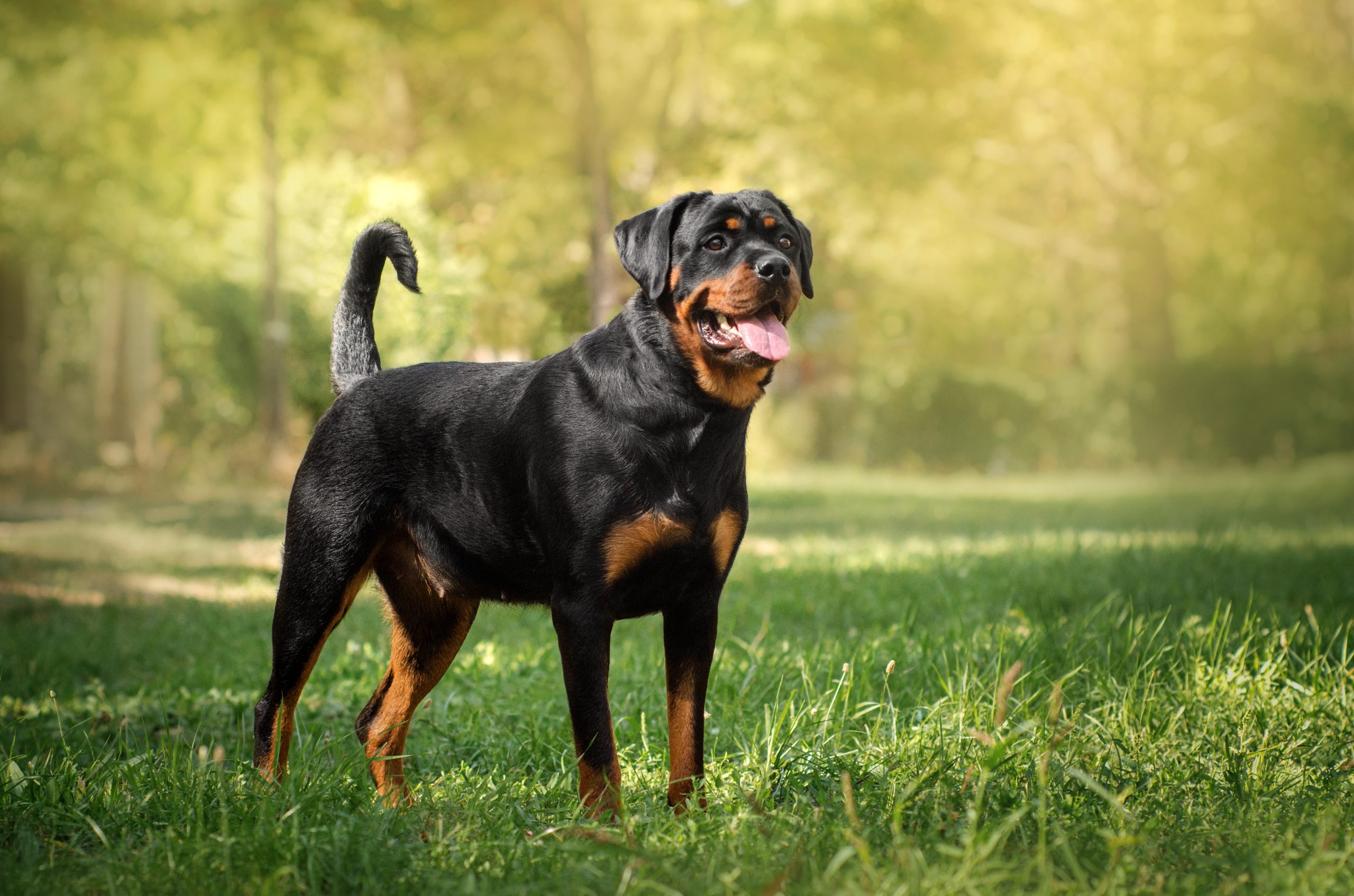
Rottweilers are medium to large-sized dogs, with males typically standing between 61 to 69 cm at the shoulder, and females measuring slightly less, between 56 to 63 cm. Their weight ranges from 36 to 60 kg, depending on gender and overall build. The breed’s coat is predominantly black, adorned with distinct tan markings on the face, chest, and legs.
Rottweilers generally have a lifespan of 8 to 10 years
Temperament and Personality Traits
Rottweilers are known for their loyal and protective nature. They are often described as confident, calm, and fearless. Despite their imposing appearance, they are affectionate and often gentle with family members. However, they can be wary of strangers, making them excellent guardians.
These dogs are energetic and require regular physical activity to keep them happy and healthy. Ideally, they should have at least two hours of exercise per day, which can include walks, playtime, and mental stimulation through training and puzzle toys.
Rottweilers have a short, dense coat that requires minimal grooming. A weekly brush will suffice to remove loose hairs and keep their coat shiny. During shedding seasons, more frequent brushing may be needed to manage hair loss.
Health
Like all breeds, Rottweilers are prone to certain health issues. Common concerns include hip and elbow dysplasia, heart conditions, and certain cancers. Regular veterinary check-ups and a balanced diet can help mitigate these risks and ensure a healthy life.
In essence, Rottweilers are devoted and courageous companions, ideally suited to active households willing to invest in their training and care. With the right environment and attention, they make wonderful additions to the family.
